

Is Lifting Ecology Blocks with Cranes Safe?
One of the practices we see in the field is lifting ecology blocks With Cranes. You might know them as Bin Blocks or Mafia Blocks as well. They are commonly the 2’ by 2’ by 6’ concrete blocks that mostly weigh in at 3400 lbs, or just over 1500 kg. They are commonly made of waste concrete at concrete batch plants. When I say, “waste”, it’s the excess concrete that returns to the plant that is still useable. Instead of throwing it away, they pour it into forms to at least be able to earn $50 to $75 for the concrete instead of paying to dispose of it. Customers get a block. The supplier recoups the money and saves on a disposal expense. But who is saying these blocks are safe to life with a crane? Anyone seen a tag or instructions? Since we now have Lift Directors out there, who is stopping to consider the wisdom of lifting these with a crane?
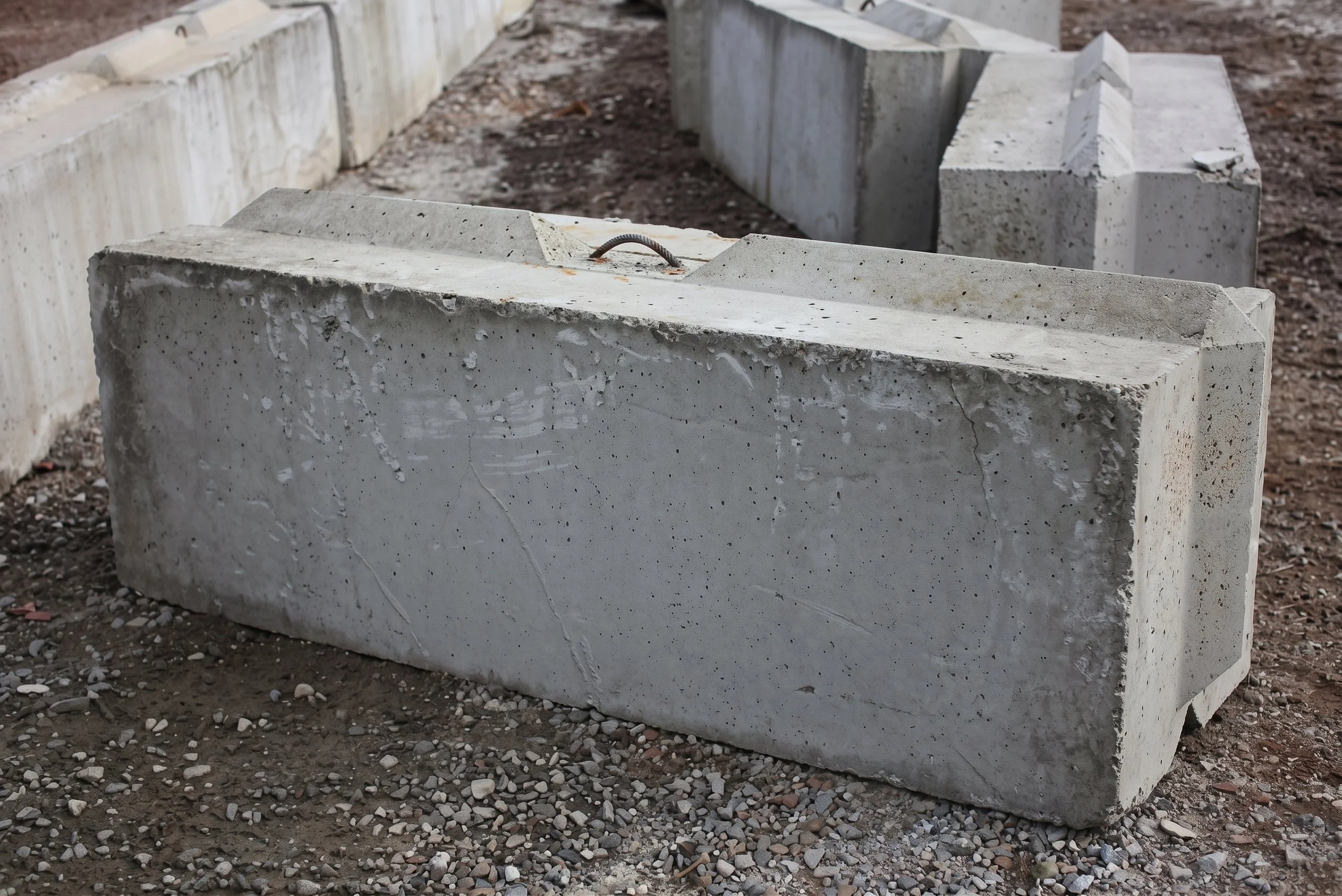
Common Ecology Block with Rebar Lifting Eye
If we are to deep dive on lifting standards, OSHA makes it clear that lifting items requires engineering. You walk up to a concrete block with a rebar hoop on it for lifting. The question is, who said to lift it by the eye? It’s readily apparent that the block fabricator is suggesting that it be lifted by the lifting eye. Was it engineered? Do we have a tag? A materials cert? A rating anywhere? Was it tested to 125% as a minimum as OSHA 1926.251 suggests? Who inspected it last? Is it corroded or bent? It’s possible to argue that this isn’t “rigging equipment” as laid out in this section. Keep in mind that section 251 is broadly written and sets up Standard Operating Procedures any OSHA compliance officer could cite in the event of an incident.
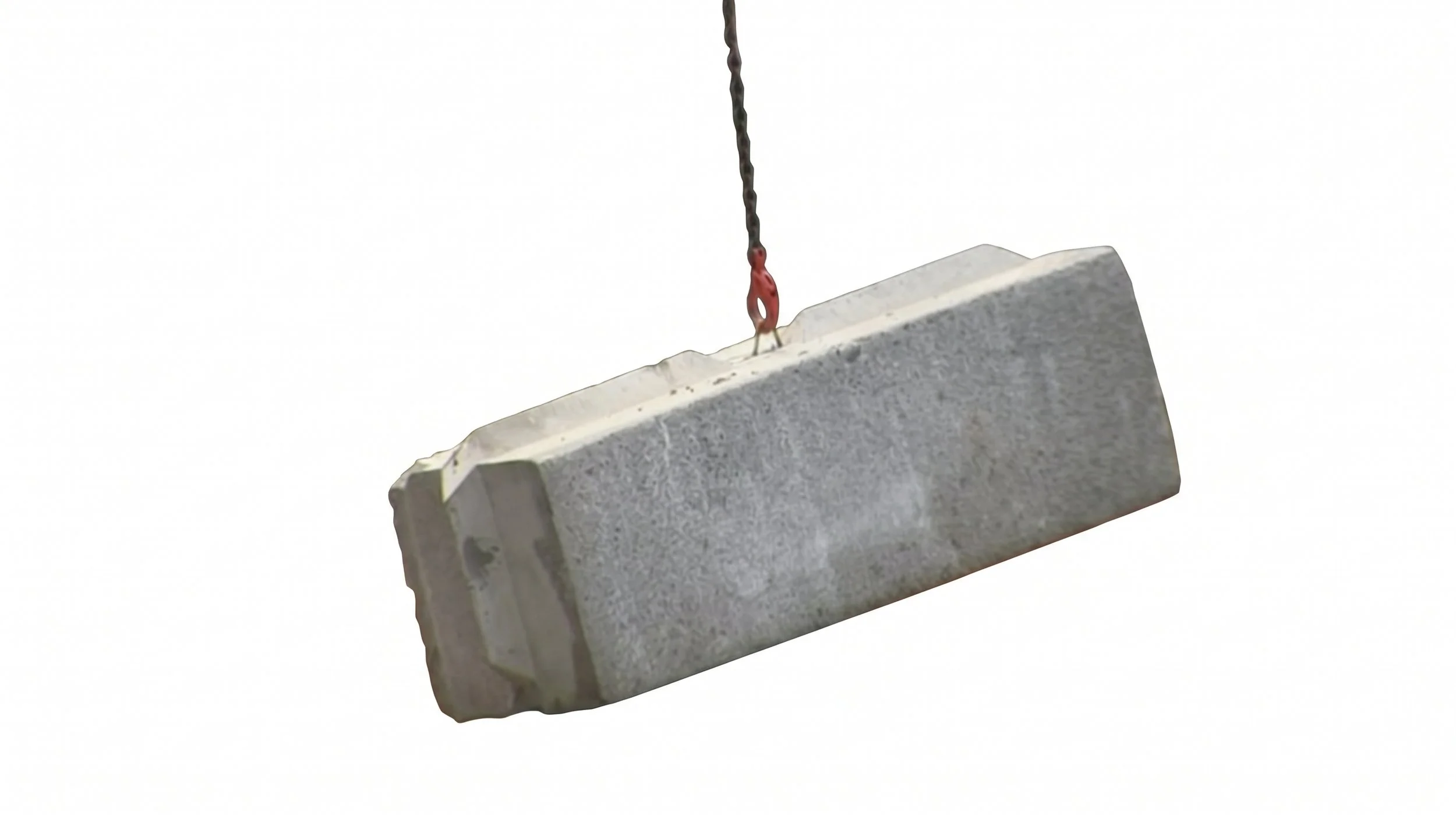
What this lift looks like on a common ecology block. No rated lifting eye looks like this on a rated and engineered 3400 lbs lifter.
Standard Practices in Hoisting
As an analog argument, you are make a lift of an air handling unit that was just delivered to site. The manufacturer is to provide instructions and ratings and center of gravity for each model. And they will have been expected to have tested their engineering to 125% as a real world test on at least one unit. The question has been asked and answered in a Letter of Interpretation in 2012. OSHA expects a load test on manufactured lifting beams even if it’s designed. Do you suspect that anyone has load tested your Ecology Block to 125% or engineered it? Is there a record available anywhere? You don’t even know who manufactured it. These are the questions contractors, riggers, and crane operators need to ask themselves. Are you following a defensible practice in hooking up a crane to just anything because it looks like what the producer wanted? Is looking right a standard practice in cranes?
Work Safe BC has a Policy
In Canada, British Columbia has a standard set. Their manufacturers have designed the lifting eye for three lifts. Link to PDF at WorkSafeBC
Out of the Form
On to the transport truck
From the transport to it’s final location
This is the end of the lifting cycles allowed on the lifting eye.
Reasons for the caution:
Corrosion on the bars
Cold joints in the concrete
Wire ropes not able to flex or be inspected
Ecology Blocks, Bin Blocks, Bunker Blocks, Mafia Blocks… whatever you call them in your area, they are incredibly useful. And for decades. So how should you move them if you can’t lift them by the lifting eyes cast in? Clamps. Bin Block Clamps grab them from the side and deliver the safety you need. You’ll have the tag showing the capacity. The service class required by ASME B30.20 will be on the tag as well as the manufacturer. That 3:1 safety factor is already built into the system. And we can provide evidence of a test as well that would meet the Letter of Interpretations description for this mass produced product.
You Wouldn’t Use A Shackle without a Listed Manufacturer
The challenge of lifting an ecology block is that they drop when the lifting eyes fail. It’s a known problem. If you lift it and it drops, you’ve lifted a block in a practice that is known to have failures. It’s not a good position to be in. If the crane is sizeable, and the drop is over soils, it might be fine from the magnitude of the shockload. But if the lift is over shoring or another structure that could fail, you could have an item that could go through a few floors before it stops. If the crane is smaller, you could shock load it and damage the structure. Or worse, cause it to tip. Without a manufacturer, a tag, instructions, rating, inspection and so on, it can become a serious problem for a crane crew to make the lift even if it isn’t going over people. Today’s Crane programs don’t allow for guesswork. It’s the licensed people that are meant to be the line of defense on these matters.
ASME B30 for all Crane Lifts is Our National Consensus Standard
If we want to go further, ASME B30.20 BTH-1 (Below the Hook) sets standards for the engineering and design criteria involved that mostly isn’t done in Ecology Blocks. Page 22. I’ll just share the paragraph headlines on Chapter 3 page, 1 Column 2. The text is copywrite protected and not something we can share in detail.
“Fatigue Design Basis”
“Curved Members”
“Allowable Stresses”
“Member Properties”
Not Meant for Crane Lifts
I would posit that none of these items have been considered with most block suppliers. They utilize something like a #5 rebar stock as their standard practice. They are set up to be lifted by other items like excavators, telehandlers and other mobile equipment. A crane wasn’t in the plan and the engineering was never done on a product meant to address their excess concrete disposal problem. To that end, crane people should not be lifting ecology blocks with a crane unless they can safety get rigging slings under the blocks and that rigging can deal with the sharp edges of the concrete. Or, if they have a clamp meant to lift ecology blocks. I’ll just say that we have two. Here’s the second option that is an adjustable clamp.
If your safety and crane hoisting programs haven’t considered the risk of lifting ecology blocks by the lifting eyes with cranes, it’s time. The failure of ecology blocks is a known problem. The engineering for lifting them with a crane is non-existent with most blocks. We can help with clamps if that’s the right solution for your operations.