

Crane Attachments are Safer Than Slings
Crane Attachments are safer than Slings because they are engineered. Slings are the default because they are the Swiss Army Knife of rigging. But the Swiss Army Knife isn’t good at each function. It just gets you by versus having nothing. When it comes to putting production and safety on the line, do you really want to rely on the all in one tool? Or should you be thinking of the purpose built tool? Let’s take a look at a video and see what you think after seeing it.
Below the Hook Lifters Are Designed For Stability
Below the Hook Lifters spread out the lifting points to the corners of the lifter, or go well above the center of gravity. In both cases, it makes it very difficult for an item to roll out. The slings will be well outside of the center of gravity which will contain the load. If the attachment point is well above the center of gravity, it becomes nearly impossible for a load to roll over. You would need an external force to upset the balance like partially landing on a floor.
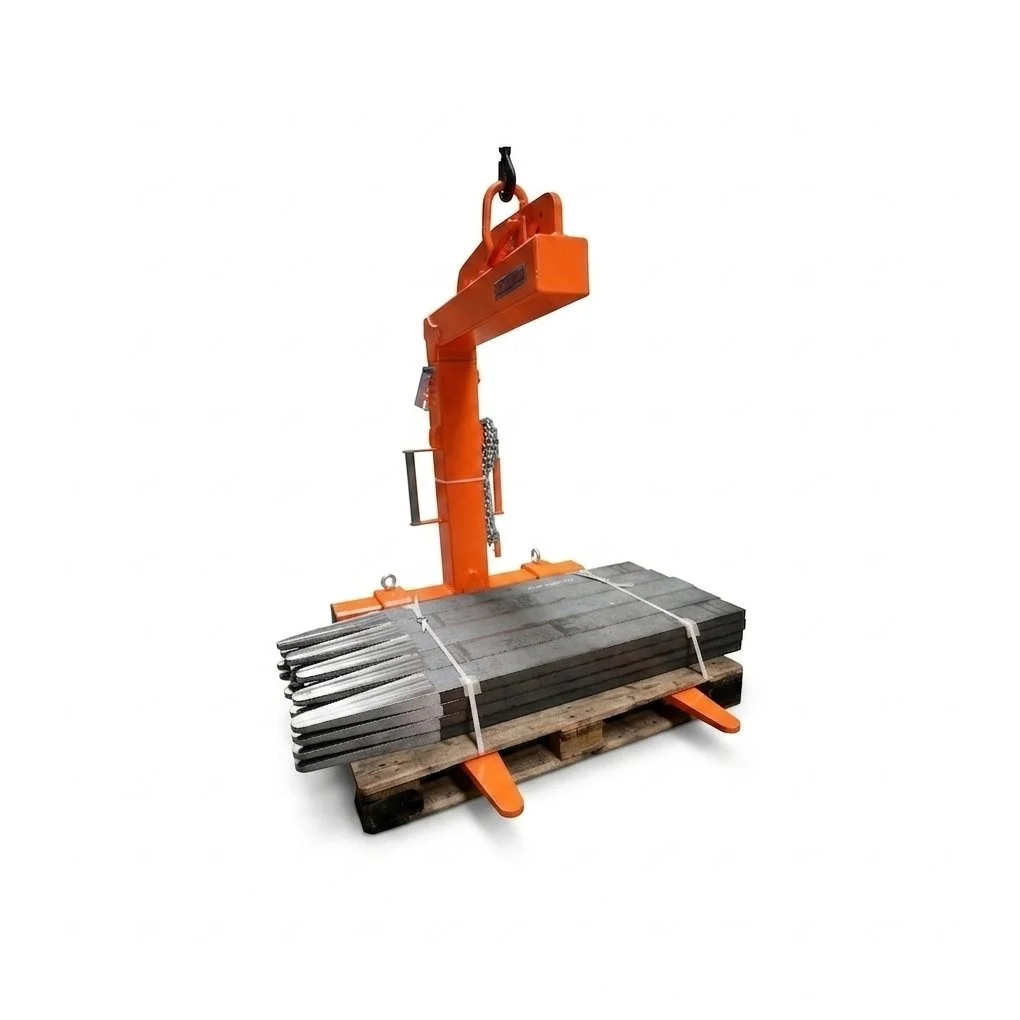
Crane Forks attached well above the center of gravity.
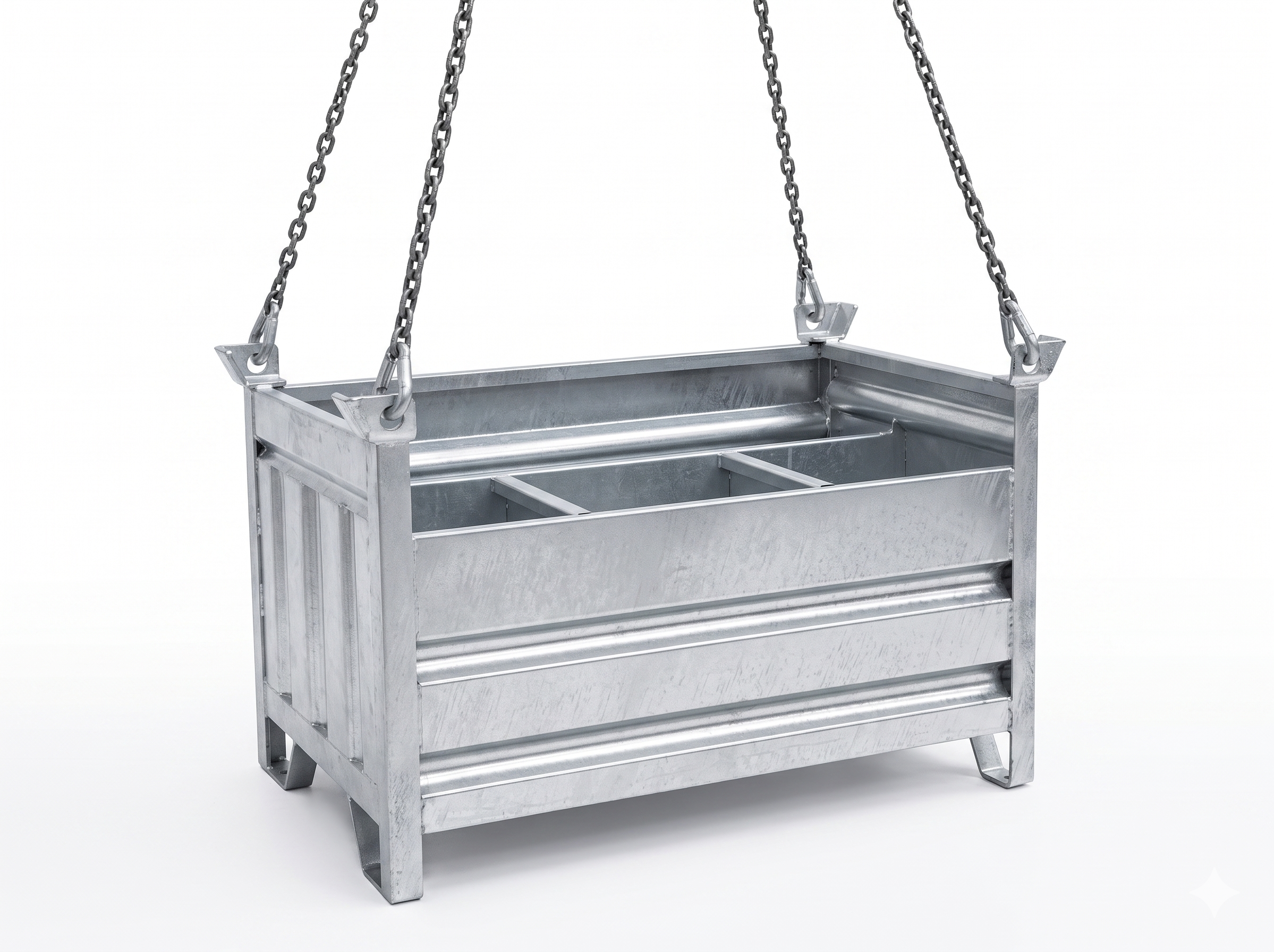
Crane Basket - Attachments high up. Spread out. Stable if COG is not above attachments.
In the video we see a lift that is relying on the riggers knowing the center of gravity. They aren’t paying attention to it at best, and at worst, they were never informed. In which case every person in the circle needs to be made aware that they all failed at a part of their step. From the supplier of the glass, to the superintendent on site and the safety manager to the rigger and Lift Director. Everyone should have asked about the center of gravity. The challenge is that we get away with these sorts of errors for a career because it’s rare, and we have other safeties that usually catch us.
Lower the Center of Gravity with a Below the Hook Attachment
One of the advantages of a Below the Hook Lifter is that you lower the center of gravity. Slings have a weight that is often tens of pounds. When you are lifting loads that are 2000 lbs or more, this becomes irrelevant to the Center of Gravity. But if you put a 500 lb lifter into the equation at the bottom of the lift, you can lover the center of gravity significantly. For round numbers, if you have a 2000 lb lift with a center of gravity 50 inches above the ground or sling attachment, you can lower it by 9 inches or nearly 20% by having a lifter that is 500 lbs with a Center of Gravity that is 6” or so. This might not sound like much, but it drops the Center of Gravity to being well inside of the stability triangle that is critical so stability.
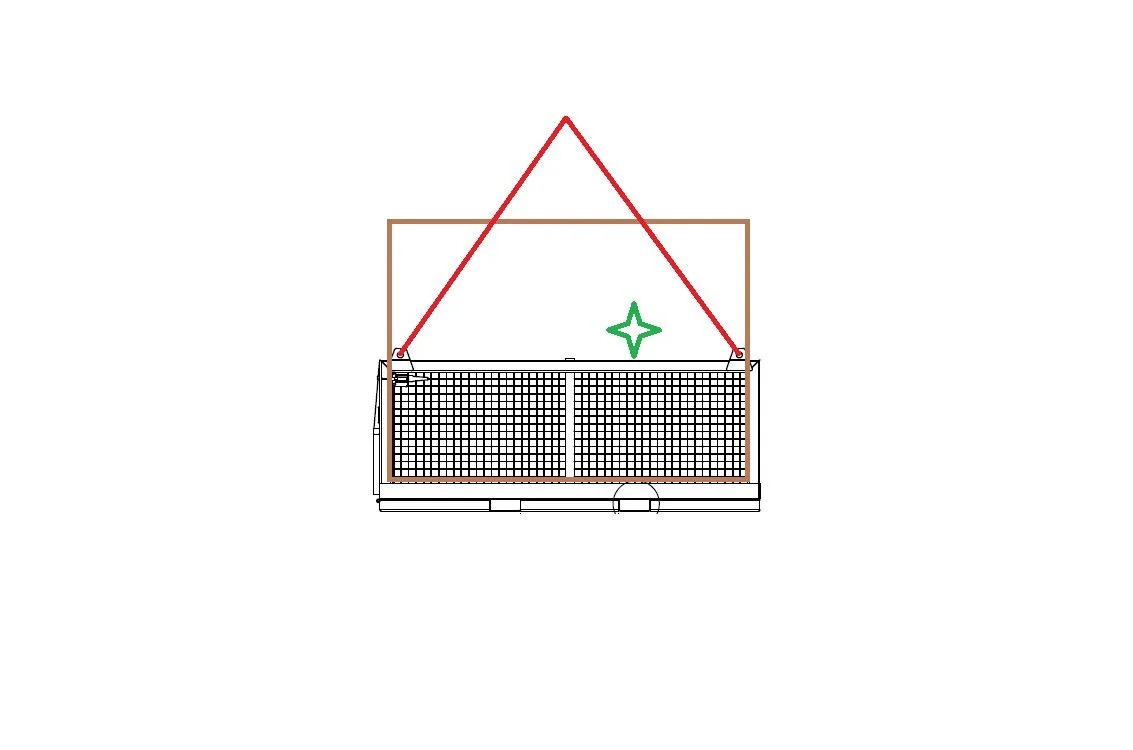
Stability triangle and how lifters change it dramatically with weight and attachments points moved out.
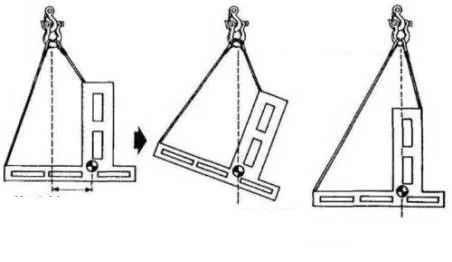
Small adjustments make huge differences.
Speed Up Operations With Below the Hook Devices
You can speed up crane operations with Below the Hook Lifters. It’s quite common for a lift to take 7 minutes as a cycle. I was a crane operator and lots of jobs plan for a 7 minute cycle. It doesn’t have to be that way. I’ve been on jobs where 16 lifts an hour was common. This is a 50% reduction in time. So how is it accomplished? By removing slings, or having them preinstalled. The time required to install slings is enormous. Often it’s 3 minutes to put them on and remove them in the lift cycle. Running two slings under a lift is not only not as stable and illegal in many cases, it’s just wasteful.
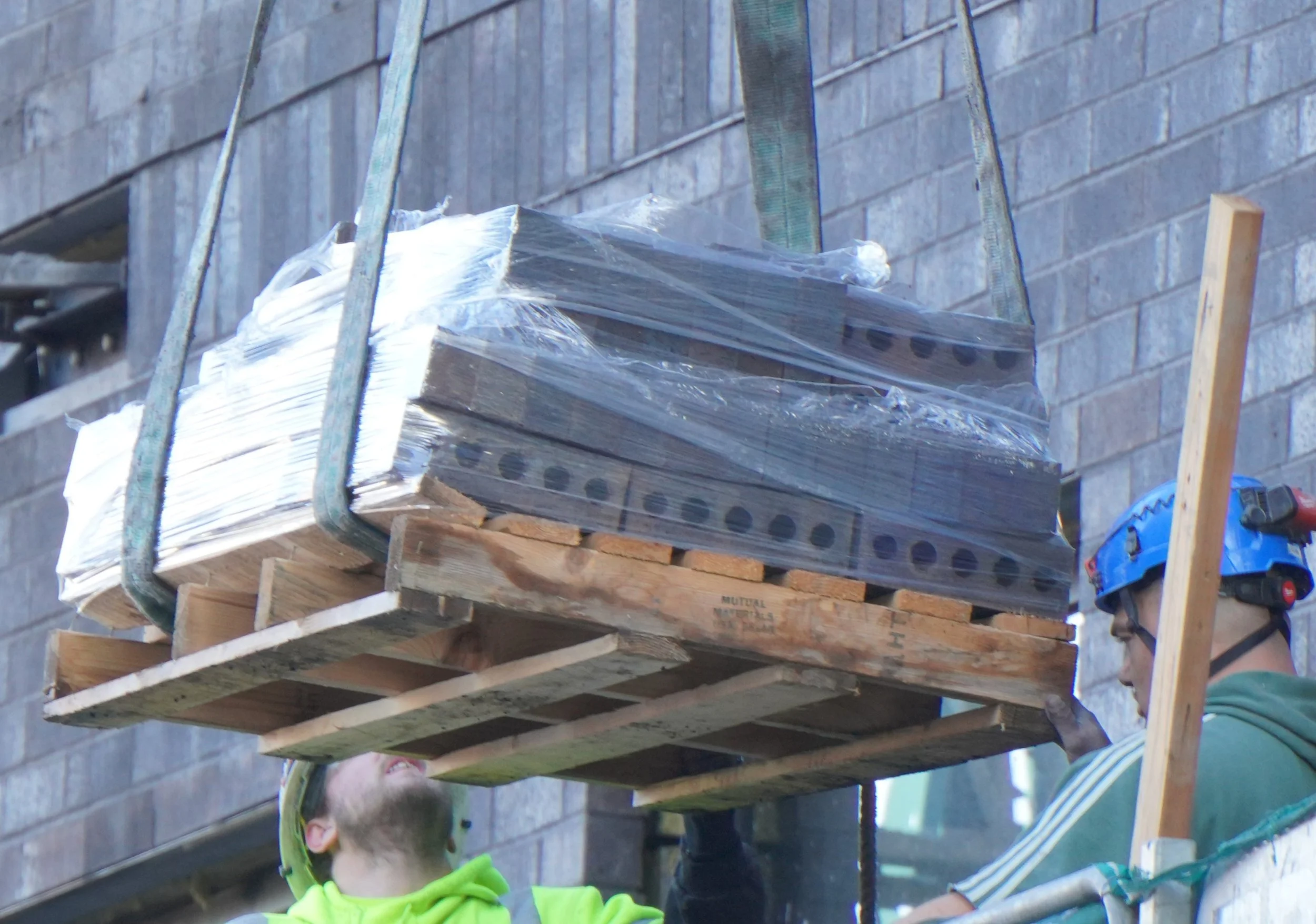
Example of lift where time is lost, and it’s just trying to stay together. Rolling the dice.
Crane Operations running at $500 per hour consume $8.33 every minute. This means that adding three minutes per lift costs you $25. If that happens on 5 lifts per hour on a 10 hour day, that’s $1250 of lost production every day of the week. The disconnect in construction is that purchasers buy the cheapest option. The field crew all wants what they know, even if it isn’t the best. So equipment managers don’t want to rock the boat and they keep buying subpar equipment, or crews just use slings. But with planning, you can change the dynamic. If you lift pallets one at a time, you can halve the lift cycles with a double pallet bin. In terms of economics, You can make the lift cycle go from 7 minutes to 3.5 minutes. And you remove a lift cycle. So you’ve actually went from 14 minutes to 3.5 minutes. You save 10.5 minutes and $87 every time you use it versus slinging up a pallet. And you deliver more stability and the legality of the lift is no longer questionable.
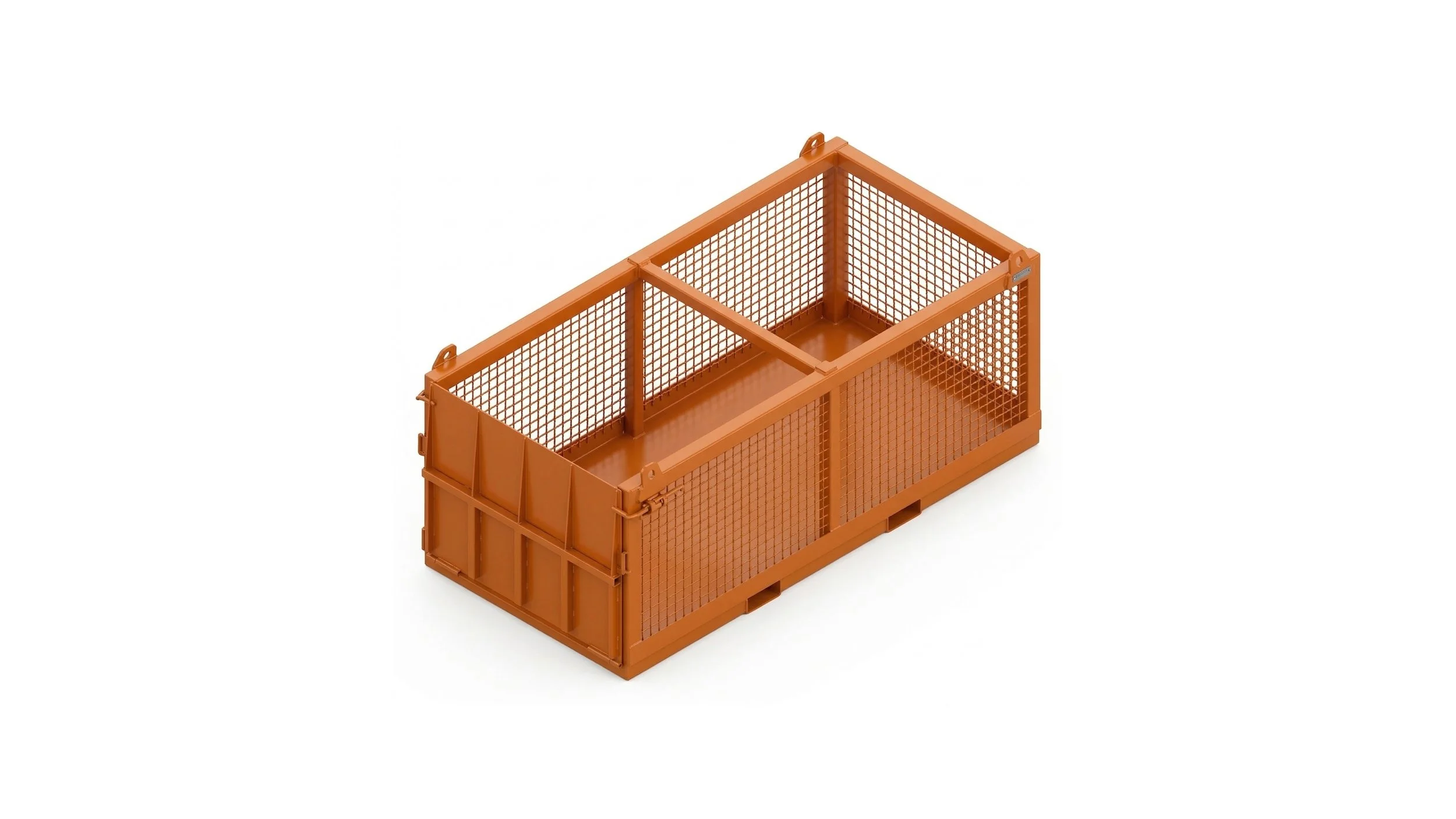
Lift two pallets of good at one time. Level. In a steel structure. Exceeds OSHA requirements.
Lifting Clamps also Save Time
Lifting Clamps are required for some lifts. Riggers often rely on slings as the compromise, as if there is an option. I’ll give you an example. People lift Ecology blocks on slings. So what does this require?
Lift the block.
Set the block on dunnage.
Install the slings.
Lift the block again.
Carry dunnage to next location.
Meet the block at the destination.
Set the block down on the dunnage
Remove the slings.
Lift block by eye.
Remove the dunnage and set the block down.
Or, if you have a clamp…
Ditch the slings. The practice is just unsafe as well as being unproductive. Contractors that hand out two slings to the field in an effort to save money cost themselves millions per year. It can literally be a half million in losses per year per job. How many jobs are you running as a company? And I assure you that if you aren’t doing this, you aren’t complying with OSHA 1926.251. Train your crews to use lifters and you’ll find consistency of action. You’ll engineer the hazard out of the work at the same time. You won’t have near misses like the glass lift because someone, or several someones, forgot about the center of gravity. You’ll manage your operations speed with the right tools. Set up a loading zone with the right tools there. Set up a landing zone for each working deck and be ready to offload quickly with a pallet jack or otherwise. You’ll never look back.