

Lift Planning for the Worst Scenarios
Lift Planning for Worst Scenarios is something not done by most crane teams. We look at a load and imagine it going up on the crane hook stable at all times and landing peacefully. This leads to behaviors that ignore the what ifs that will happen in a career. What if a rogue wind comes in at 40 mph during the middle of your lift? I know I’ve had that happen. 0 mph to 40 without warning. What if you lose power on a crane and all of the brakes lock up while moving at full speed on all functions? Are you ready with every lift for that? Take a look at what that drama looks like.
Lifting Above the Center of Gravity
Lifting above the center of gravity is half of the battle here. In the video they are fortunate that the direction of swing is against the slings to help retain it in the rigging structure. But if the load were turned 90 degrees, it would have the potential to roll out. This is a bin for moving fluids too, so the 275 potential gallons can have a different cadence than the hook and exacerbate the problem. In the end, we want to create a stability structure in the rigging over the load. One that keeps the imaginary lines that mimic the rigging above the center of gravity. This can be as a triangle, square, rectangle or cone. I say this is half of the battle because just having it above the center of gravity isn’t the whole picture. if the attachment isn’t positive or structural, then even an attachment above the center of gravity isn’t failsafe. Here’s a load of glass rolling out of a lift on slings that can flex and move.
Structural Lifter Rigidity and Above Center of Gravity
Structural Lifters provide rigidity and positive attachments above the load. The practice has long be hailed as the right solution in hoisting. Lift Directors should be looking at these Crane Rated Bins and other Below the Hook attachments. Seeing rigging and utilizing basket rigging should be seen as something used only in perfect scenarios. It’s honestly best when they are structurally locked in place as well. Let’s take a look at some of our solutions relative to what they were lifting in the first video of the swinging load.
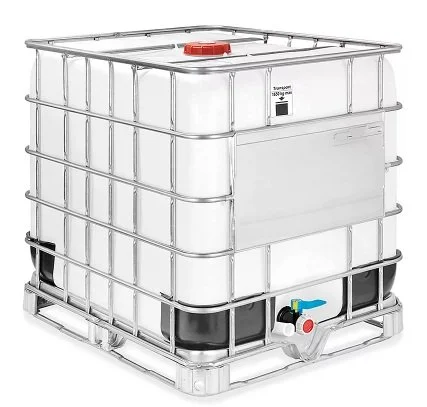
IBC Tank from the first video.
Instead of putting slings through an IBC tank and hoping it goes well, you can be sure it’s stable with a Structural Lifter like a Crane Pallet Bin
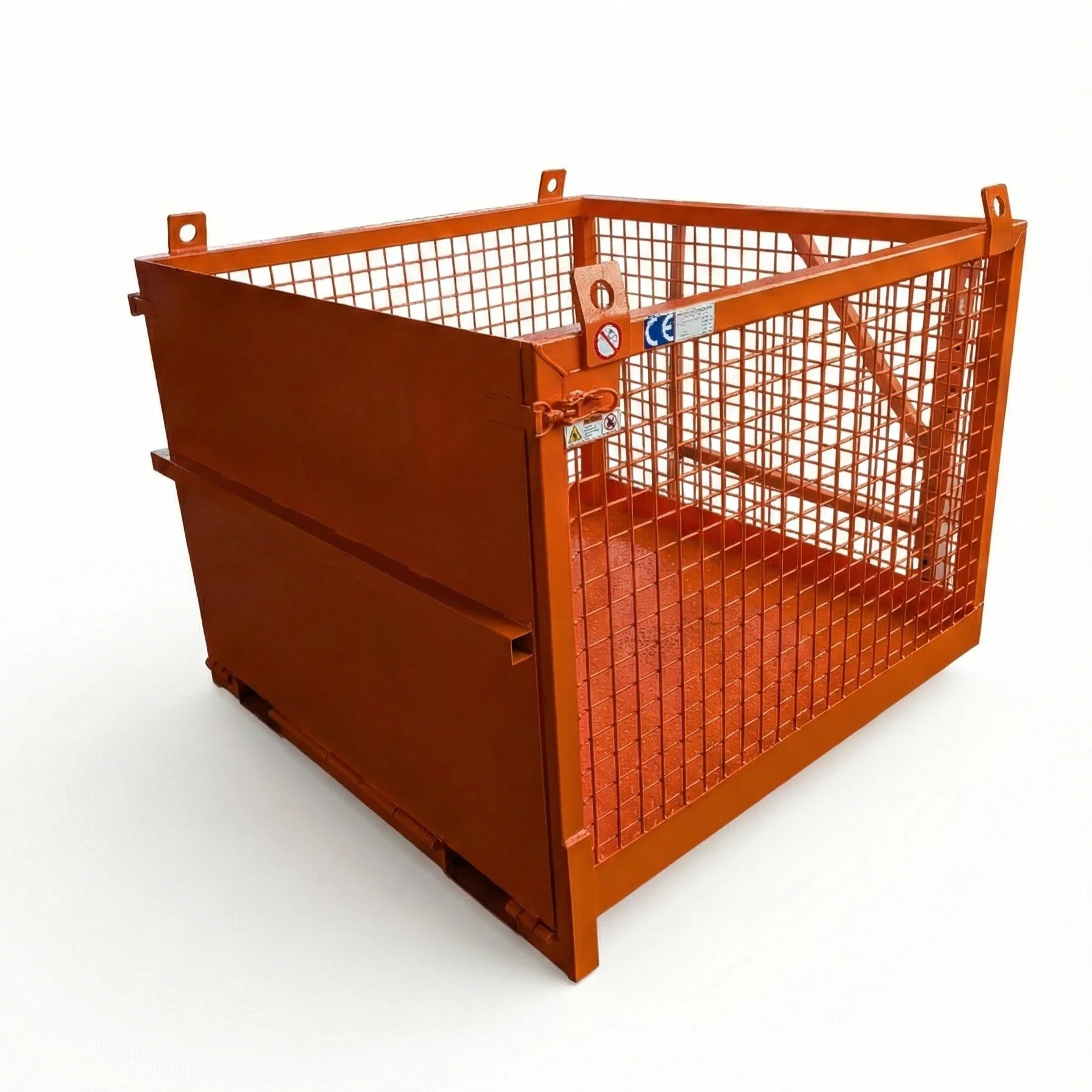
1058 Crane Pallet Bin Rated at 3300 lbs
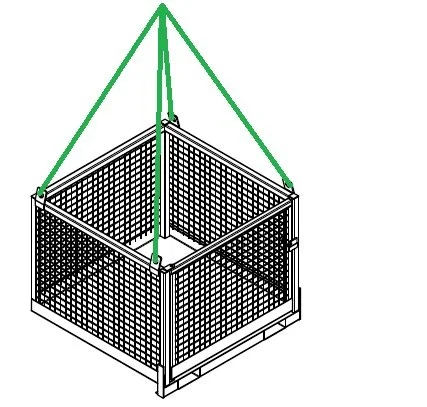
Crane Pallet Bin with Positive attachments.
Rigid Below the Hook Structures Deliver Positive Stability
Structural Rigidity in Load Containers as prescribed in ASME B30.20 BTH-1 sets up a scenario where the load in the bin does not bend of flex the bin. The green lines are the flexible rigging running up to a hook point. If the IBC Tank were in the Crane Pallet Bin, there would be no way for the IBC to roll out of the rigging on the crane. It would have a positive attachment between the crane and the lifter. The only way to unload the tank without human intervention would be to turn the crane upside down. If we get that far, I think we can absolve the rigger of responsibility. Let’s see this in another option.
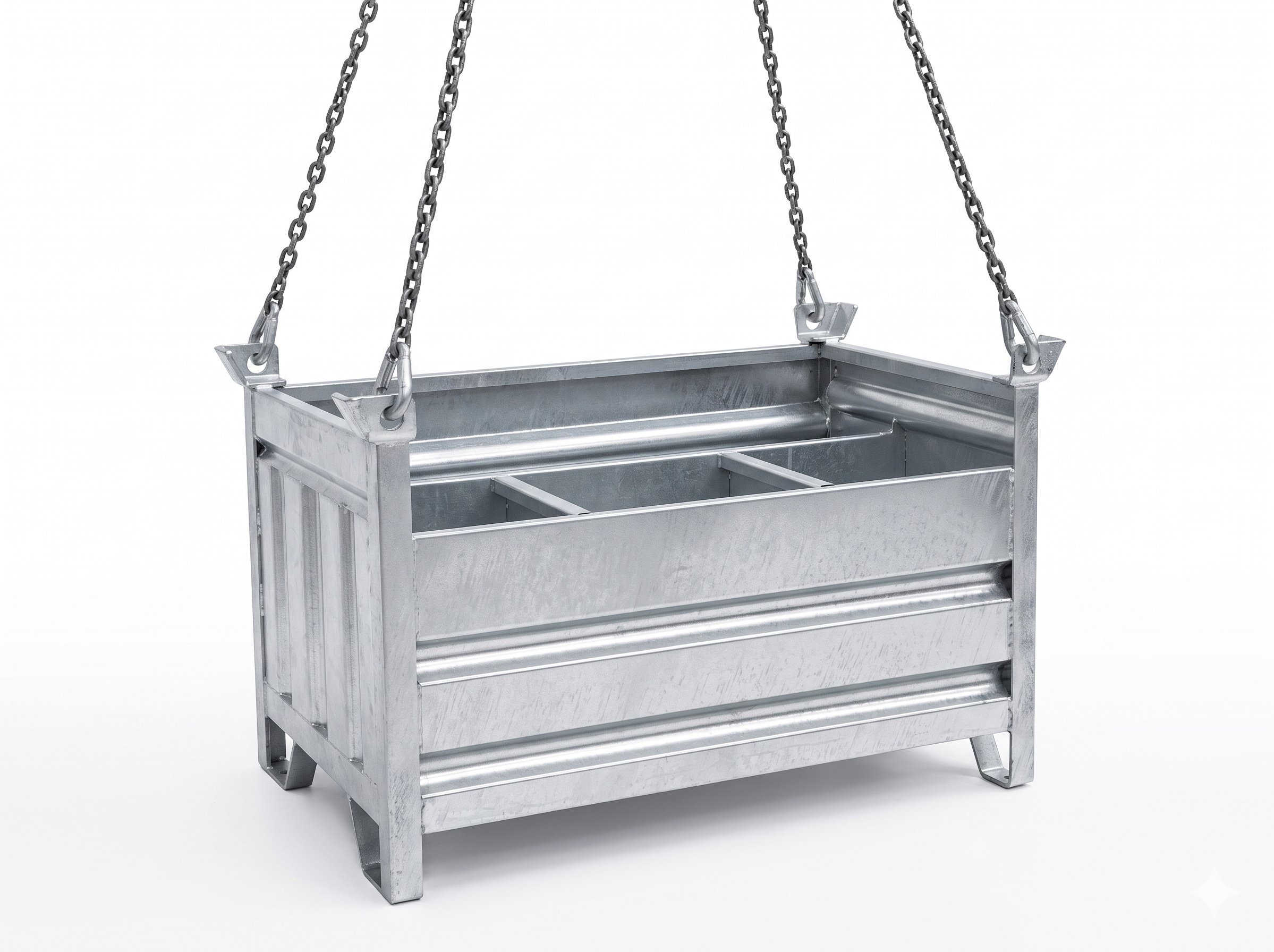
Eichinger 1316 Crane Basket
Positive Attachments is a Positive Practice
We’ve all seen people use slings to lift crane baskets. Our crane baskets are crane rated. We rate these up to 3300 lbs when lifted by the crane eyes. The positive attachment ends up above the center of gravity. Unless you put something above the structure, there will be no way for anything up to 3300 lbs to cause this basket to not be stable during a lift. 40 mph winds or power shutting off while the crane is moving the trolley at 3.5 per miles per hour. The combination of a rigid structure and a positive attachment will keep that load attached to the crane.
The Solution Begins in Planning
The solution for the problem of stability at the worst moments has to begin in the job planning phase. Contractors have to see the worst case scenario so they can see they need the right tool to keep their people safe. Take a look at the glass rolling out video. If we were to guess that the semi trailer replacement was $75,000. Then we think of the discussions and time spent on finding the right solution is another $50,000 in team hours, that’s $125,000 lost as a best case scenario. They’ll also lose in the team regaining trust in the process from the bottom to the crane operator. That purpose built lifter for $15,000 starts to look quite affordable. If anyone got injured, that 6 figure problem quickly becomes a seven figure problem. There is no savings in taking a short cut. The only question is when will you pay.
Speed is a Byproduct of Crane Rated Lifters
One of the results of using lifters is that your crane teams will be able to lift more cycles in a day. And not just a few. A lift cycle is often 35 to 45% installing and removing rigging slings. It’s not uncommon for attaching bins to take 15 seconds to install 4 hooks. And it’s often 1.5 minutes or more to install slings and hook them in. The same dynamic is true on the other end when you land items, but to less of an advantage. The result is that you’ll save money at $500 an hour for the job. If that’s $8.33 a minute, that can be $16.66 per lift very easily.
The Right Tool in Below the Hook Lifting Attachments
The Right Tools in Below the Hook Lifting Attachments can be found here at CraneGear.net. Eichinger.de has been at this game for 122 years. They have a vast catalog. If we can help you find the right solutions for your work, we can be contacted by phone or email as well. At CraneGear, we have 25 years of crane experience in high rise construction. We can competently walk you through the process of rigging practices and how they interface with our crane lifting attachments. We’ll show you how to implement these processes to save you money as well as deliver the safety solutions for the common practices. We’ll look forward to working with you when the time comes to change these processes. And best of all, if we are ordering several items, our wholesale prices can be quite a pleasant surprise as well.