

Skip Pan Rental
Construction projects require efficient material handling solutions, and skip pan rental offers contractors a flexible alternative to purchasing expensive equipment. These specialized crane trash skip containers enable safe vertical transport of heavy materials and construction waste, making them essential for multi-story projects and sites with limited ground access. The Eichinger 1045 Automated Skip Pans bring new functionality in dumping out with automation. If this is waste, demolition debris, or excavation materials, you can get a job done safely and faster than with conventional skip pans as well.
Skip pan rental provides immediate access to certified equipment without the substantial upfront investment, ongoing maintenance responsibilities, or storage requirements that come with ownership. Whether you’re managing debris removal on a high-rise project or transporting bulky materials in tight tunnel projects, understanding skip pan rental options can significantly improve your project efficiency and cost management.
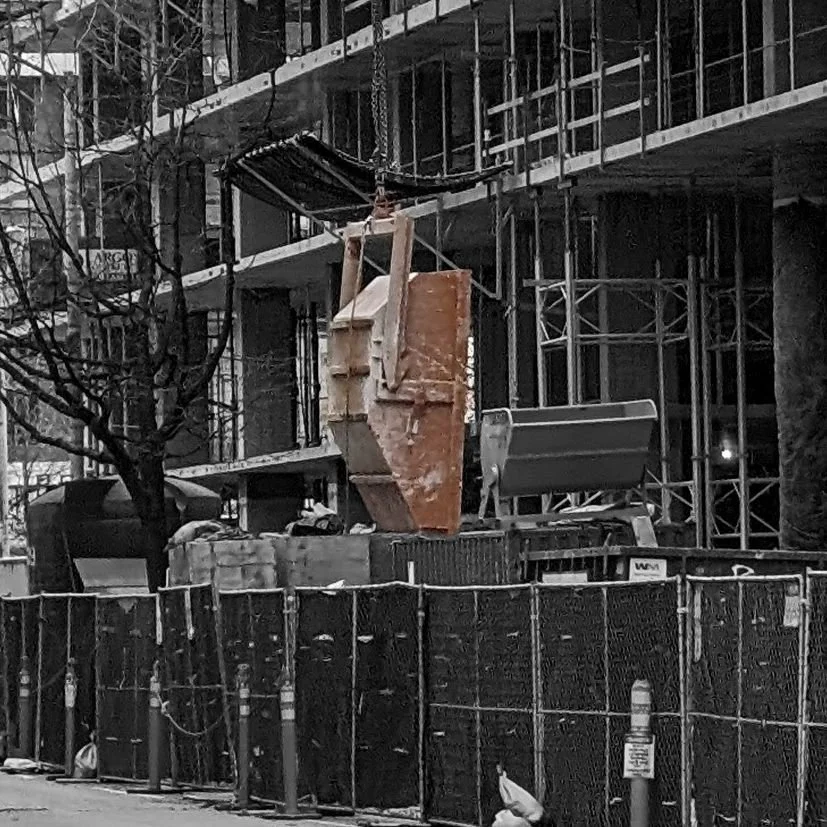
4 yard Semi Automated crane skip pan.
This comprehensive guide covers everything from equipment types and safety requirements to rental costs and booking processes, helping you make informed decisions for your next construction project.
What is Skip Pan Rental
Skip pan rental provides temporary access to specialized crane attachments for material handling and waste removal on construction job sites. These heavy-duty steel containers, also known as crane skip bins or dump boxes, are designed as below-the-hook lifting devices that attach to cranes for efficient vertical material transport.
Rental companies typically offer skip pans for flexible terms ranging from daily to monthly rates, with significant discounts available for extended rental periods. Most rental agreements include fully certified equipment meeting ASME B30.20 standards, complete with proper documentation and inspection records. At CraneGear, we just offer the longer term rentals of 3 months or longer and include the shipping costs each way.
The rental process eliminates the need for contractors to invest in equipment that may only be needed for specific project phases. Instead of purchasing skip pans that can cost $7000 or more for new units, contractors can access the latest certified equipment for a fraction of the ownership cost. CraneGear can even pick it up for you. Job is done and so are your responsibilities for the equipment.
Standard rental terms include delivery and pickup scheduling, though specific arrangements vary by location and rental company policies. The equipment comes ready for immediate use with current certifications and safety documentation, allowing contractors to focus on their project requirements rather than equipment compliance.
Types of Skip Pans Available for Rent
Skip pan rental fleets typically include a wide range of sizes and configurations to meet diverse project needs. Understanding the available options helps contractors select the most appropriate equipment for their specific applications.
Standard Capacity Options
Capacity - 1 to 10 yards
Typical Dimensions - 10’ by 6’
Weight Rating - 3300 lbs per yard.
Ideal Applications -
Small debris removal, roofing projects - Eichinger 1045’s have a flat bottom design.
2.6 yard
48” x 96” x 20”
8800 lbs
Medium construction waste, concrete washout
5.2 yard
60” x 120” x 24”
17,600 lbs
Large volume debris, bulk material transport
10.4 yard
72” x 144” x 30”
33,000 lbs
Heavy demolition, structural steel projects
Specialized Configurations
Automatic Self-Dumping Bins feature bale arm mechanisms that enable controlled dumping without manual intervention. These units include automated latching systems that secure the container during transport and release for safe unloading. The bale arms are designed to lay flat during loading operations, eliminating hazards from vertical arm projections. The arms are completely out of the way for operations with other equipment.
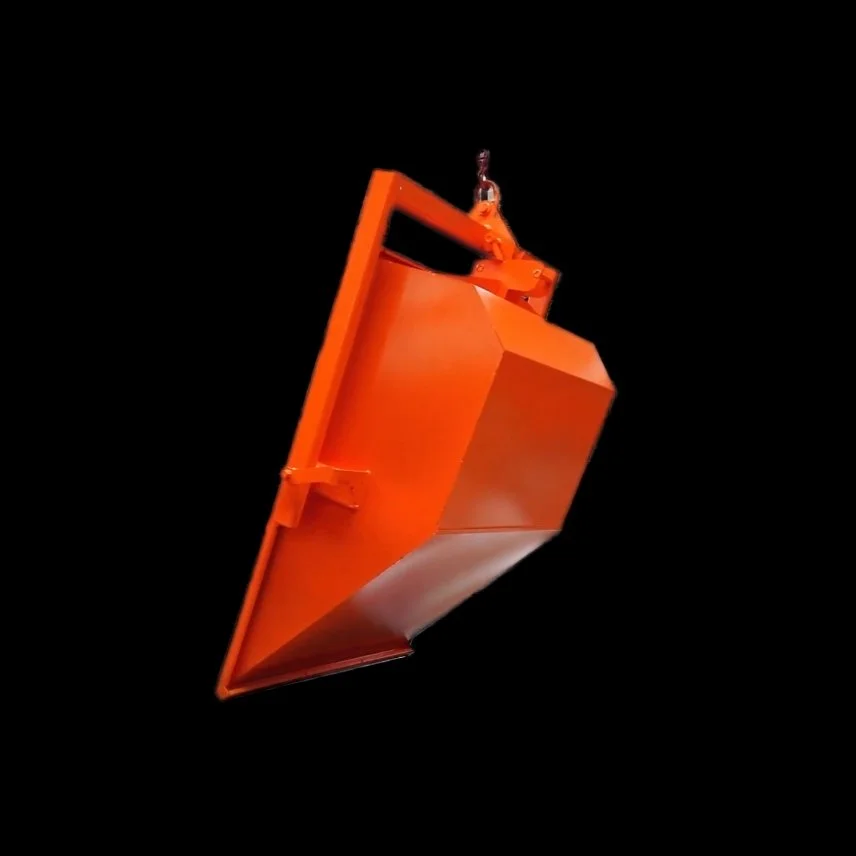
Eichinger Crane Skip Pan Automatic
General Purpose Skip Pans offer versatility for holding construction materials, concrete washout, and mixed debris. Their fully welded steel construction with 3/16” steel plate provides exceptional durability for repeated use with heavy materials weighing up to 3,300 pounds per cubic yard. Our 1046 Bulk Bins are a Skip Pan that is well suited for this work.
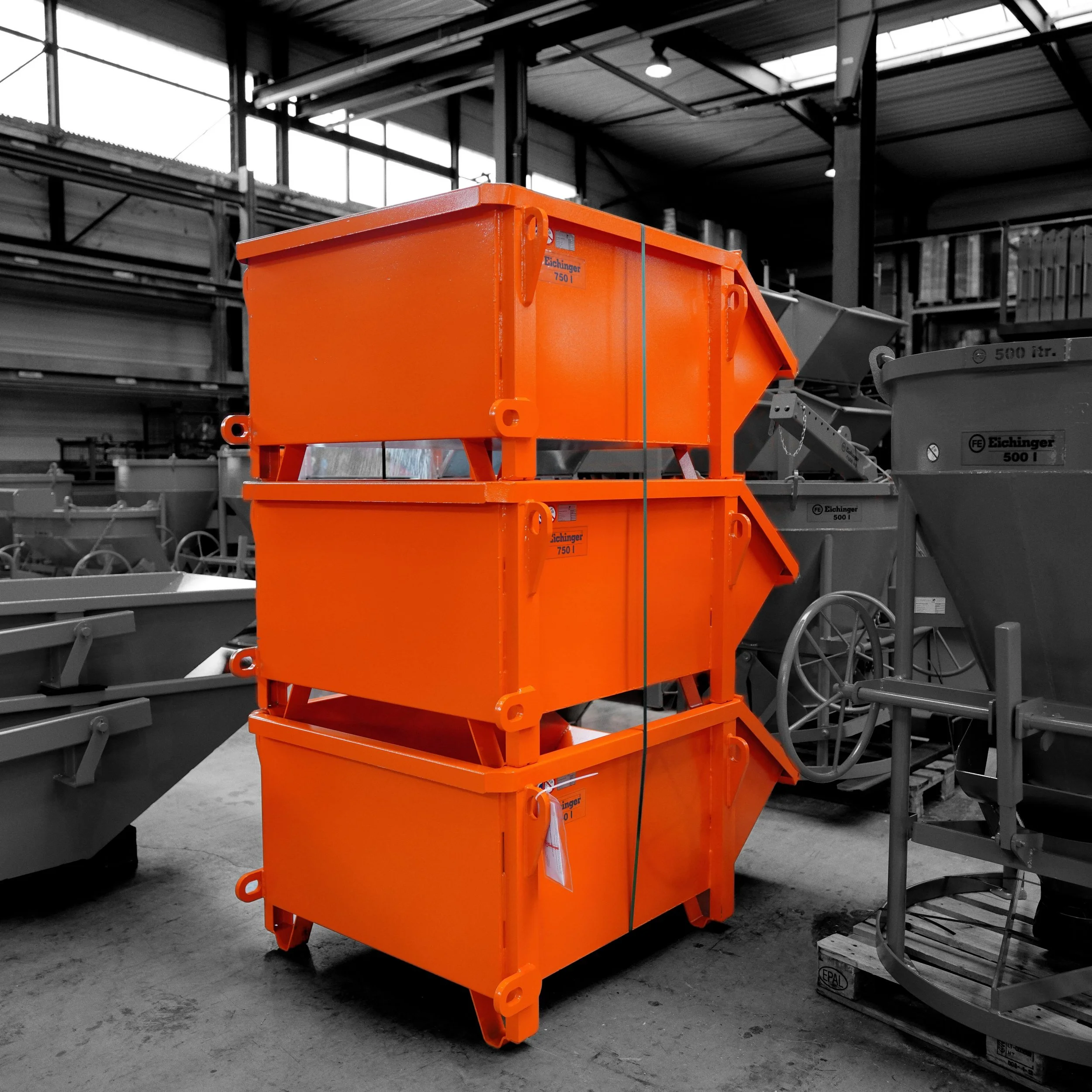
1046 Skip Pans
Custom Telehandler Dump Boxes accommodate sites where traditional dump trucks cannot reach. These specialized containers include forklift pockets for handling by telehandlers or forklifts in addition to crane lifting capabilities when supplied with lifting eyes.
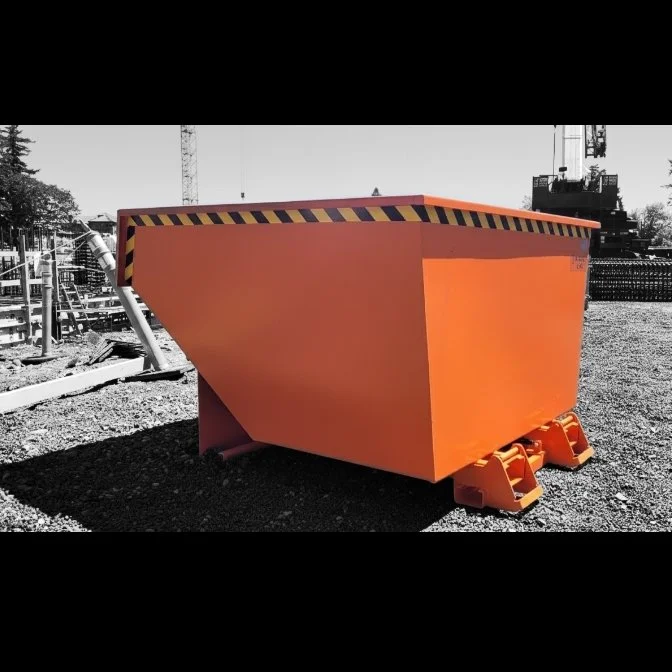
Telehandler Tipper Locks on Forklifts Automatically. Never get out of the seat.
Popular Rental Applications
Skip pan rental serves numerous construction and industrial applications where efficient material handling is essential. Understanding common use cases helps contractors identify when skip pans provide the most value for their projects.
Construction Job Sites
Construction sites frequently require vertical transport of materials that ground-based equipment cannot efficiently handle. Skip pans excel at moving sand, gravel, dirt, and construction waste between different building levels. The containers’ sturdy construction handles the demanding conditions typical of active construction environments. In the MEP and footing stages, this can be very helpful for precise delivery of Capillary Break or rock for plumbing pipes.
Multi-story projects particularly benefit from skip pan rental for transporting building materials to upper floors where conventional delivery methods are impractical. The equipment eliminates the need for manual carrying or complex material hoisting systems, significantly reducing labor costs and safety risks. Our 5.2 yard Bins will fit in most roll off dumpsters. This can make quick work of waste removal operations. A clean job site is a safe site.
Roofing Projects
Roofing applications demand specialized material handling solutions for working at height safely. Skip pans with flat-bottom designs provide stable platforms for transporting roofing materials while the sloped end facilitates easy loading and unloading operations.
The low front lips on roofing-specific skip pans enable safe loading without requiring workers to enter the container, maintaining compliance with fall protection requirements. Steel sides provide containment for loose materials like shingles, while the robust construction withstands the rigors of repeated lifting cycles.
With two units, one unit can always be in transit to the dumpster while the second is on the roof being loaded. Saving hours on mobile crane days can lead to significant savings on a project as this is one of the few places where time can be made up simply due to having the right tool for the job.
Demolition Projects
Demolition work generates large volumes of debris that must be efficiently removed from upper levels. Skip pans enable controlled debris removal that keeps pace with demolition activities while maintaining site organization and safety.
The containers’ capacity to handle mixed debris types, from structural steel components to masonry rubble, makes them versatile tools for demolition contractors. The ability to precisely position containers at specific locations optimizes workflow and minimizes secondary handling of debris.
Safety and Certification Requirements
Skip pan rental equipment must meet stringent safety standards to ensure safe operation in construction environments. Understanding certification requirements helps contractors verify they’re receiving properly tested and documented equipment.
ASME B30.20 Compliance
All rental skip pans must meet or exceed ASME B30.20 certification standards, which govern the design, construction, and operation of below-the-hook lifting devices. This standard establishes requirements for structural design, load testing, marking, and operational procedures.
The ASME BTH-1 standard provides the engineering criteria used by manufacturers to determine structural dimensions, allowable stresses, and safety factors. These standards ensure skip pans can safely handle their rated loads under typical construction site conditions.
Our Skip Pans at CraneGear exceed the ASME B30.20. We load test our design to 300% under the German standard. The ASME requires just a 125% load test. This requirement leads to us building the pans with enough residual strength that they will last for decades.
Documentation and Tagging
Rental equipment includes comprehensive certification documentation with each unit. Proper tagging displays the working load limit, and certification compliance information in clearly visible locations on each skip pan.
Regular inspection requirements ensure ongoing safety compliance throughout the rental period. Rental companies maintain detailed maintenance records and provide documentation showing inspection schedules and any repairs or modifications made to the equipment. The users are required to keep up on the inspection criteria.
Construction Material Handling Safety
The robust 3/16” steel plate construction provides exceptional durability for handling heavy materials up to 3,300 pounds per cubic yard. This construction standard ensures containers maintain structural integrity under repeated loading cycles with abrasive materials like concrete, steel, and aggregate.
Sloped steel sides and low front lips enable safe loading procedures without requiring workers to enter the container. This design feature significantly reduces fall hazards while maintaining efficient loading operations.
Bale arms on self-dumping models are specifically designed to lay flat during loading operations, eliminating the vertical arm hazards present in some competing designs. The automated latching systems ensure secure container closure during lifting operations.
Fork pockets on select models provide additional handling flexibility, allowing repositioning with forklifts or telehandlers when crane access is limited. These pockets are reinforced to handle the concentrated loads from forklift tines without compromising container integrity.
Rental Process and Considerations
Renting a skip pan equipment requires understanding the booking process, scheduling requirements, and operational considerations that ensure smooth project integration. Advanced planning becomes particularly important during peak construction seasons when equipment availability may be limited. Special applications like the 10.4 yard self dumping bins take significant time to manufacture and ship. 60 days ahead is the sort of planning we would recommend. If you can plan for 90 days, you should be in good shape in North America.
Equipment Availability and Booking
Equipment availability varies significantly by geographic location. The great thing about working with CraneGear.net is that we can simply build you a new one if our supplies are low and you are reaching out with enough lead time for us to build and ship you a new unit.
Delivery and Pickup Scheduling
Most rental agreements include delivery and pickup scheduling as part of the standard service. Delivery timing coordination becomes critical when skip pans are needed for specific project phases or when crane availability windows are limited.
Pickup scheduling requires advance notice, usually 24-48 hours, to coordinate with the rental company’s logistics operations. Return conditions typically specify that containers be empty and accessible for removal equipment.
Operator Certification Requirements
Safe skip pan operation requires properly certified crane operators and riggers familiar with below-the-hook lifting device procedures. OSHA regulations mandate that only qualified employees handle lifting equipment, and this requirement extends to skip pan operations.
Crane personnel must understand proper rigging procedures, load distribution principles, and the specific operating characteristics of skip pan equipment. Many rental companies provide operation guidelines and safety briefings as part of their service.
The responsibility for ensuring operator qualifications rests with the contractor. When you take a rental item, you often have a short timeline to inspect the equipment. Once that timeline expires, you have taken possession of the equipment and all responsibilities for it. Damage, accidents and so on are the responsibility of the possessor and user.
Insurance and Liability Considerations
Rental equipment typically requires specific insurance coverage and liability allocation between the contractor and rental company. Most rental agreements specify damage responsibility, operational liability, and insurance requirements.
Standard practice includes damage deposits that cover potential repair costs from misuse or jobsite damage. These deposits typically range from $500 to $1,500 depending on equipment value and rental duration.
Contractors should verify that their general liability insurance covers rental equipment operations and coordinate with their insurance providers to ensure adequate coverage for skip pan operations on their job sites.
Cost Factors for Skip Pan Rental
Understanding the cost structure for skip pan rental helps contractors budget effectively and select the most economical rental terms for their specific project requirements. Rental pricing varies based on equipment specifications, rental duration, and regional market conditions.
Daily and Extended Rental Rates
Daily rental rates for skip pans typically range from $150 to $400 depending on capacity and local market conditions. Smaller containers in the 2,000-4,000 pound capacity range generally rent at the lower end of this spectrum, while heavy-duty 8,000-pound units command premium daily rates.
Weekly rental rates offer substantial discounts compared to daily pricing, often reducing the effective daily cost by 25-40%. For example, a skip pan with a $200 daily rate might rent for $1,000 per week, resulting in significant savings for projects requiring equipment for several days.
Monthly rental rates provide value for extended projects, with rates often 60-70% less than equivalent daily pricing. A high-capacity skip pan that rents for $300 daily might be available for $1,600-1,700 per month, making monthly rental extremely cost-effective.
CraneGear’s rental packages at $1250 per month for a 2.6 yard Skip Pan includes the shipping. The rates decrease over the rental period from 3-6 months until they get down to $767 per month as a reward for the longer term rental. If you want to just rent equipment and not own it, our offer is the best long term rental offer on the market.
Damage Deposits and Insurance
Damage deposits serve as security for potential repair costs from operational damage or misuse. Deposit amounts typically correlate with equipment value, ranging from $500 for smaller containers to $1,500 or more for heavy-duty units.
We don’t charge a deposit at CraneGear. It’s so rare that something gets damaged, that we just handle it when it happens. We do charge in advance to prevent from ever getting paid late and so shipping is already covered. This helps us keep costs down as a business.
Advantages of Renting vs Purchasing Skip Pans
The decision between renting and purchasing skip pan equipment involves analyzing upfront costs, ongoing responsibilities, and project-specific requirements. For most construction contractors, rental provides significant advantages over ownership, particularly for specialized or infrequently used equipment.
Inspections are carried out when the equipment is returned and it is documented. This aids in safety in that someone qualified has looked at the Skip Pan and documented it’s condition.
You can order exactly the gear you need. Sometimes you might have a crane where a 4 yard skip pan makes the most sense for the job. The next job might be with a self erecting tower crane where 1,100 lbs (weight of a 4 yard bin) would be the tip capacity of the whole crane. So instead of having a large and a small skip pan, you can just get the one that is right for the job.
Equipment Access and Flexibility
Rental provides access to the latest safety features and equipment designs without requiring capital investment in upgrading owned equipment. As manufacturers introduce improved designs or enhanced safety features, rental customers immediately benefit from these advances.
Our Automated Crane Skip Pans by Eichinger have an automated latch that keep your people out of the dumpsters. Instead of working at heights, over sharps or concrete, or in virtually confined spaces (inside of a 30 yard dumpster), they can remain safely outside of the dumpster and the crane operator can dump out the bins with our automated bins.
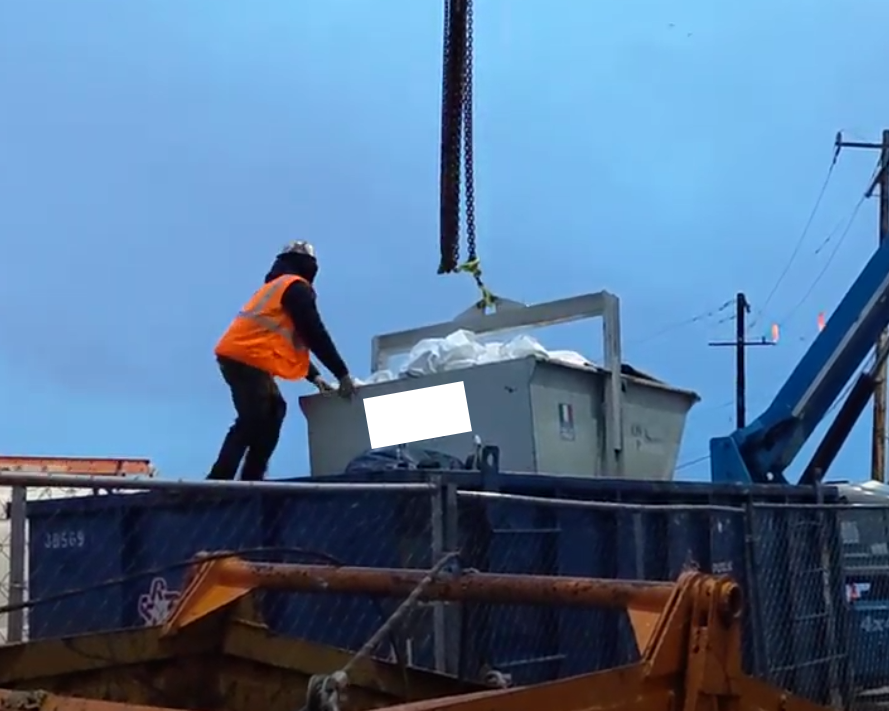
The Risks Riggers Take Should Not Be Ignored!
Project-specific requirements often demand different skip pan capacities or configurations. Rental allows contractors to select the optimal equipment for each project rather than compromising with owned equipment that may not perfectly match project needs.
Geographic flexibility represents another significant advantage, as contractors can access equipment in multiple regions without transporting owned equipment or maintaining distributed inventory.
Operational Efficiency Benefits
Rental companies handle equipment logistics including delivery, pickup, and positioning, allowing contractors to focus on core construction activities. This service particularly benefits projects with tight scheduling or complex logistics requirements.
The ability to quickly adjust equipment quantities as project phases change provides operational flexibility impossible with owned equipment. Contractors can add or reduce skip pan quantities with minimal lead time, optimizing equipment costs throughout project duration.
Seasonal construction patterns make rental particularly attractive, as contractors avoid carrying equipment costs during slow periods while maintaining access to equipment when demand increases.
Risk Management Considerations
Equipment rental transfers operational risks including damage, theft, and liability to rental companies with specialized expertise in managing these exposures. Professional rental companies maintain comprehensive insurance coverage and risk management procedures.
Regulatory compliance risks decrease significantly with rental, as professional rental companies maintain current knowledge of evolving standards and ensure their equipment meets all applicable requirements.
Technology obsolescence risks disappear with rental, as contractors always access current equipment designs without worrying about owned equipment becoming outdated or non-compliant with changing regulations.
Conclusion
Skip pan rental provides construction contractors with a cost-effective, flexible solution for material handling and waste management challenges. From daily rates starting around $150 to monthly rentals offering substantial discounts, the rental approach delivers immediate access to certified equipment without the substantial capital investment, ongoing maintenance responsibilities, or storage requirements of ownership.
The variety of available configurations, from compact 1/4-yard containers to heavy-duty 10.4-yard units, ensures contractors can select optimal equipment for specific project requirements. Combined with comprehensive safety certification, professional delivery services, and flexible rental terms, skip pan rental enables efficient project execution while maintaining compliance with ASME B30.20 standards.
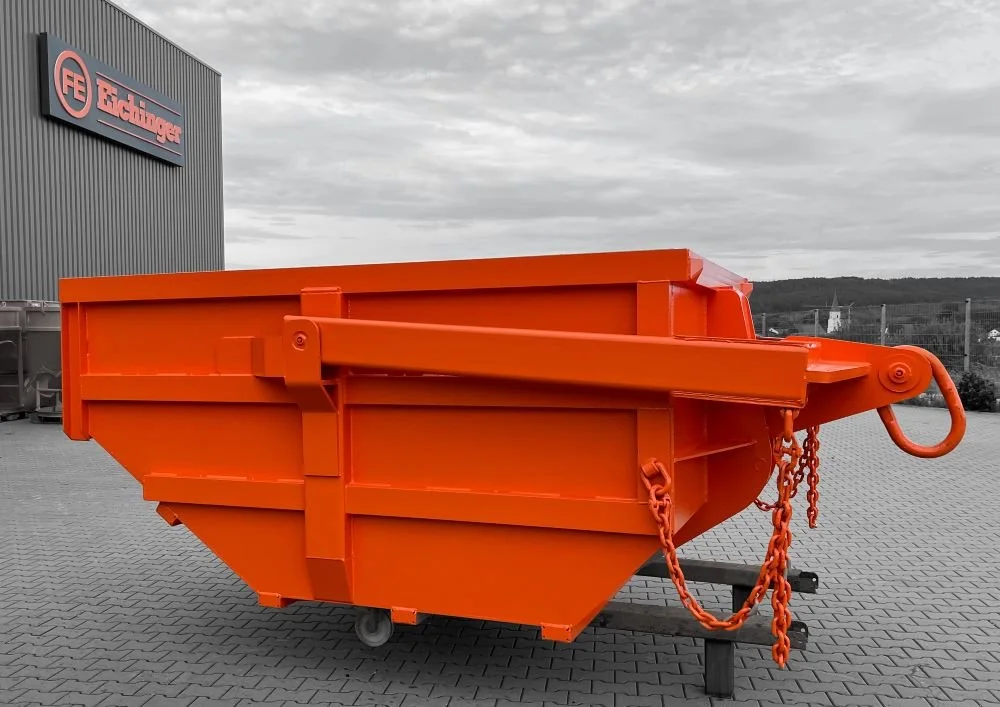
Let’s go lift 30,000 lbs in a 10.4 yard Dumping Bin
For contractors evaluating material handling solutions, skip pan rental offers compelling advantages in cost management, operational flexibility, and risk reduction. Contact qualified rental companies in your area to discuss equipment availability, pricing options, and delivery scheduling for your next construction project.