

How to Inspect Below the Hook Lifting Devices
How to Inspect Below the Hook Lifting Devices is a question no one really teaches. I was a crane inspector who would perform this service for my clients along with rigging inspections. I had to take the manuals from the manufacturers, OSHA regulations, and ASME B30.20 regulations and compile them to work through to the right answers in the consultation services I would provide. I’d like to share some of that experience and help others get to the point where they know what to look for, and some of the criteria to consider.
OSHA Uses Broad Language for Rigging Equipment for Material Handling
OSHA 1926.251 covers the Below the Hook Lifting devices. It’s written broadly so it can be a catch all document that can cover many items in ASME B30.20 Below the Hook. Load Containers, Spreader Bars, Clamps, Vacuum Lifting Devices, Lifting Magnets, Grapples, Mechanical Lifting Devices, and more.
The requirements of OSHA 1926.251 for “Rigging Equipment for Material Handling” are:
Inspected prior to use on each shift and as necessary during it’s use. Defective Rigging Equipment shall be removed from service.
Tags showing safe working load.
Not loaded in excess of SWL as prescribed by the manufacturer.
Not used without affixed, legible id markings
“lifting accessories” shall be proof-tested to 125% of their rated load.
There are some more words in there, but this is the crux of the rule in OSHA guiding us on Lifting Devices. It’s so broad that one could come away not even sure what we are including here. There is a Letter of Interpretation on the topic. More than a dozen of them. In 2004 Jeff Moser asked a question that locks in what Rigging Equipment for Material Handling we are talking about. Mr. Moser asks, “it appears that there are no inspection criteria for below-the-hook lifting devices in the OSHA regulations. Would I be in compliance with OSHA requirements if I followed ASME B30.20 for inspections of below-the-hook lifting devices?” OSHA’s response is, “An employer who follows ASME B.30.20, specifically sections 20-1.3.1 through 20-1.3.7 and 20-1.3.9 with respect to inspections for below-the-hook lifting devices (other than for slings), would be considered to be in compliance with OSHA requirements.”
OSHA isn’t adopting ASME. It is stopping to say that it’s the gold standard in their eyes for good practices in inspecting your Below the Hook Attachments, or “Rigging Equipment for Material Handling”. So let’s start with that as our guide for inspections.
Rejection Criteria in Inspecting Below the Hook Lifting Equipment
Rejection Criteria in Inspecting Below the Hook Lifting Equipment can lead to questions and general lack of understanding without experience. We might be too harsh or too light without experience.
Deformation, Cracks, or Wear
Deformation should be thought of being out of shape. If you have a structural member meant to rigidly resist forces at 300% of it’s rating, they need to be up to the task. These bends in crane lacings for example are often just mm’s of being out of line over say 3 feet before they need correction, or replace.
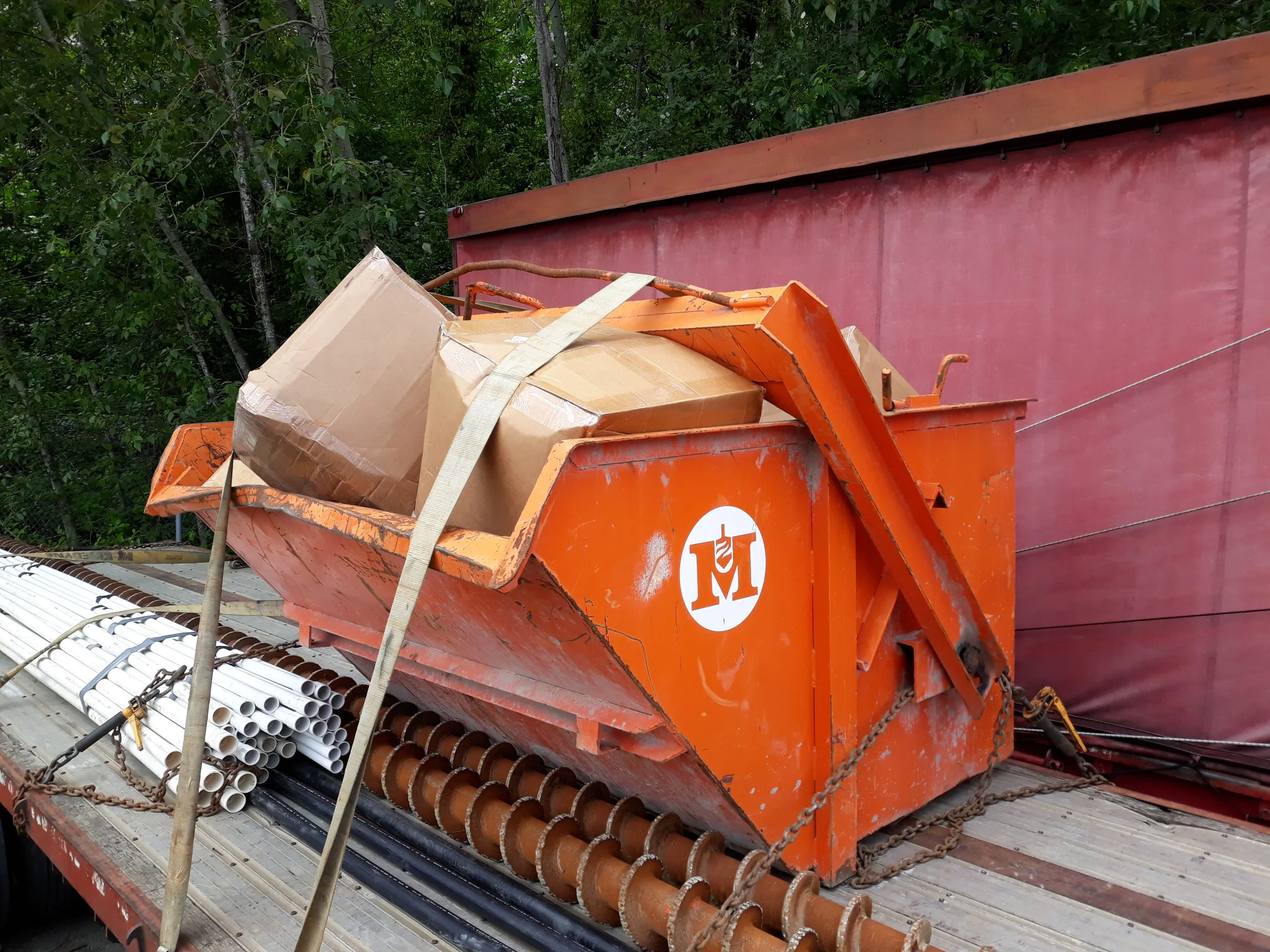
Deformed structures in lifting devices needing repair or replacement.
Cracks is largely referring to cracks in welds. It it possible to have it in parent metal of the structure as well. Generally, you have a crack that develops in the weld, or in the structure adjacent to the weld known as the heat affected zone. But more over, it could be another weld defect that doesn’t provide for a complete weld. These can be due to use, or sometimes just errors. And it happens for everyone. This is why you should inspect equipment even from day one. I’ve had welds repaired on many brand new cranes of even the highest manufacturer reputations. The picture below is an incomplete weld that was somehow missed on a brand new item. For the purposes of this document, this is a crack as well despite it not being caused by stress.
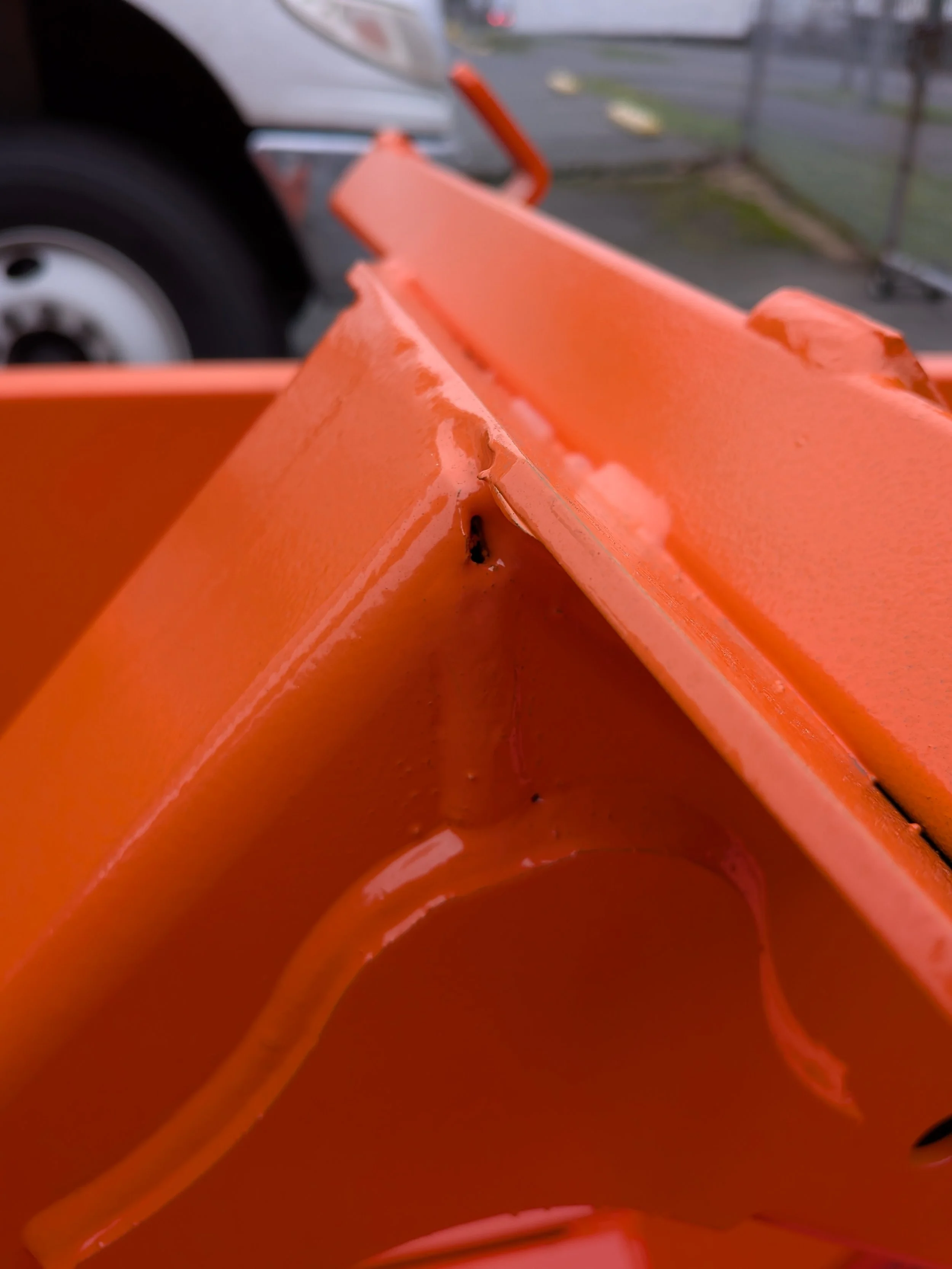
Incomplete weld from a brand new item. Inspect new gear.
Wear is due to use. If a structure is becoming notably thin, than we should be looking at when to pull the lifter out of service. The steel of a lifter is selected for thickness quite intentionally. If a skip has worn due to concrete flow abrasion. or other scraping that has removed thickness in structural supports (it’s usually all connected and must be viewed as all structural) then it should be removed from service. In reality, most engineers will cite 5 to 10% of structural loss as a reason to remove it from service, or derate it. Only a qualified person can derate it.
2.) Loose or Missing Guards. Any missing guard that would endanger a person is cause for removal of service. This is pretty self-explanatory. The one below is bent and unable to function which is of little difference than missing.
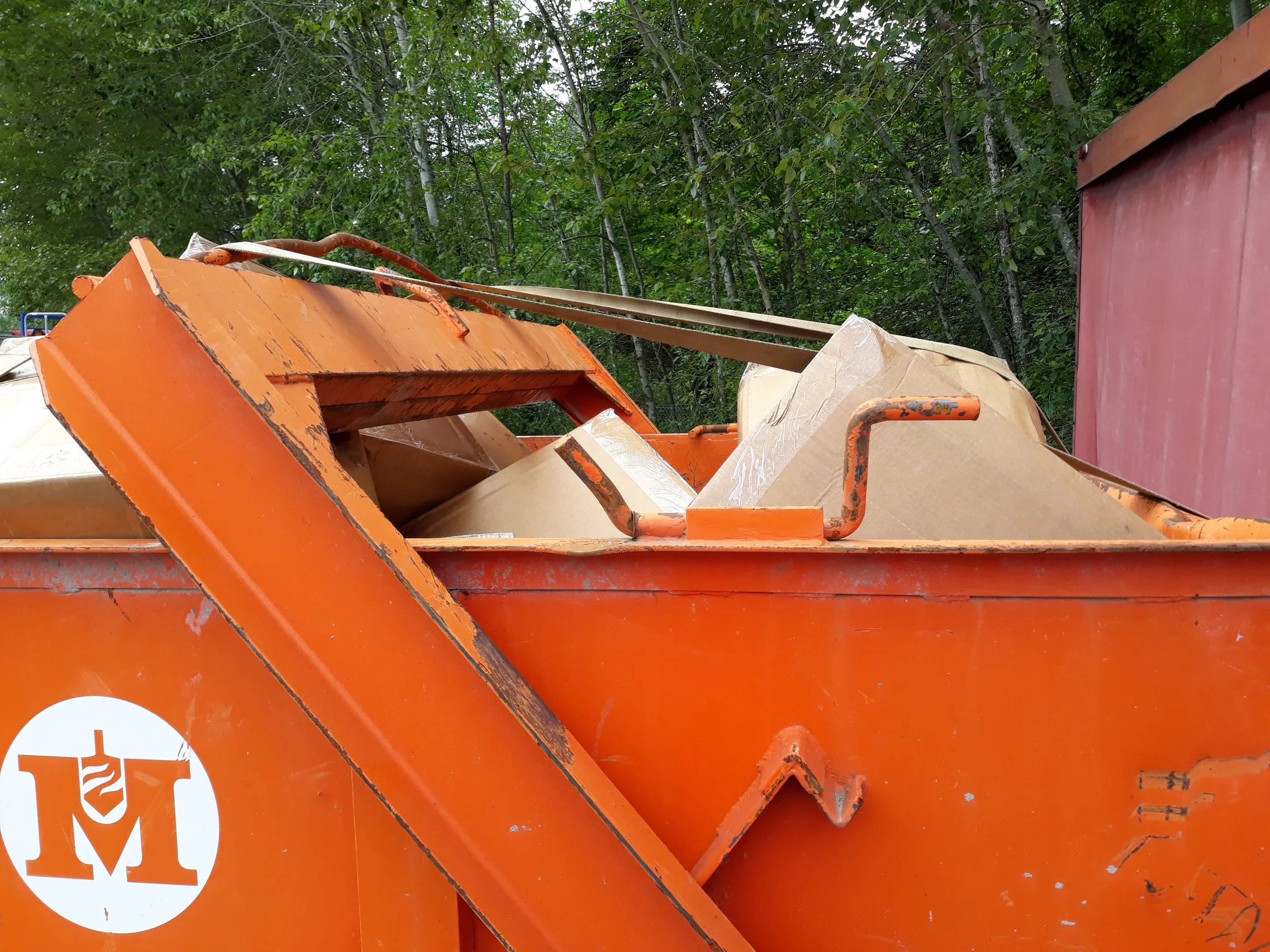
3.) Nicks and Gouges
These are usually caused by outside sources. In the above picture you can see it to the right where the paint is removed and the steel is dented. Often a gouge would be the localized removal of material (steel) due to a mechanical force.
4.) Heat Damage - Steel is commonly able to withstand temperatures of 400 degrees Fahrenheit without any losses of strength and form. If you find that steel is showing bluing, has weld where it wasn’t put there from the manufacturer, or you can see that it’s deformed likely due to heat, this is heat damage.
5.) Unauthorized Welds or Mods - If you see that a product has welds that are not consistent with what the factory would have done, or a new item is on there that wasn’t shipped with the Below the Hook Lifting Device, this will necessitate a document showing the change was approved by the manufacturer.
6.) Replacement Components not from the manufacturer. This should be obvious when it happens. If an item appears to not be of the same size, grade, color, and you can see the difference, but you can’t verify that it’s the same or from the manufacturer, you should pull the item from service until you can verify the source and that it is acceptable by the manufacturer as a suitable replacement.
7.) Improper Assembly or Functions. If items aren’t working as designed on a lifter, it needs to be pulled from service. Gates on Concrete buckets can wear out and need repair or replacement. Check for spring operated functions especially.
8.) Impaired Seized or Bound - If anything isn’t moving well, it’s time for service and inspection. All gates must close and all latches must latch. If it’s bent or seized, it must be removed from service until repaired.
9.) Supporting surface excessive wear. If there is fear of the thickness of the steel is inadequate, or the support might rip, it should be removed from service. A Rated lifter (Not ASME) example I have seen is here. The Nylon fabric is ripped in multiple places.
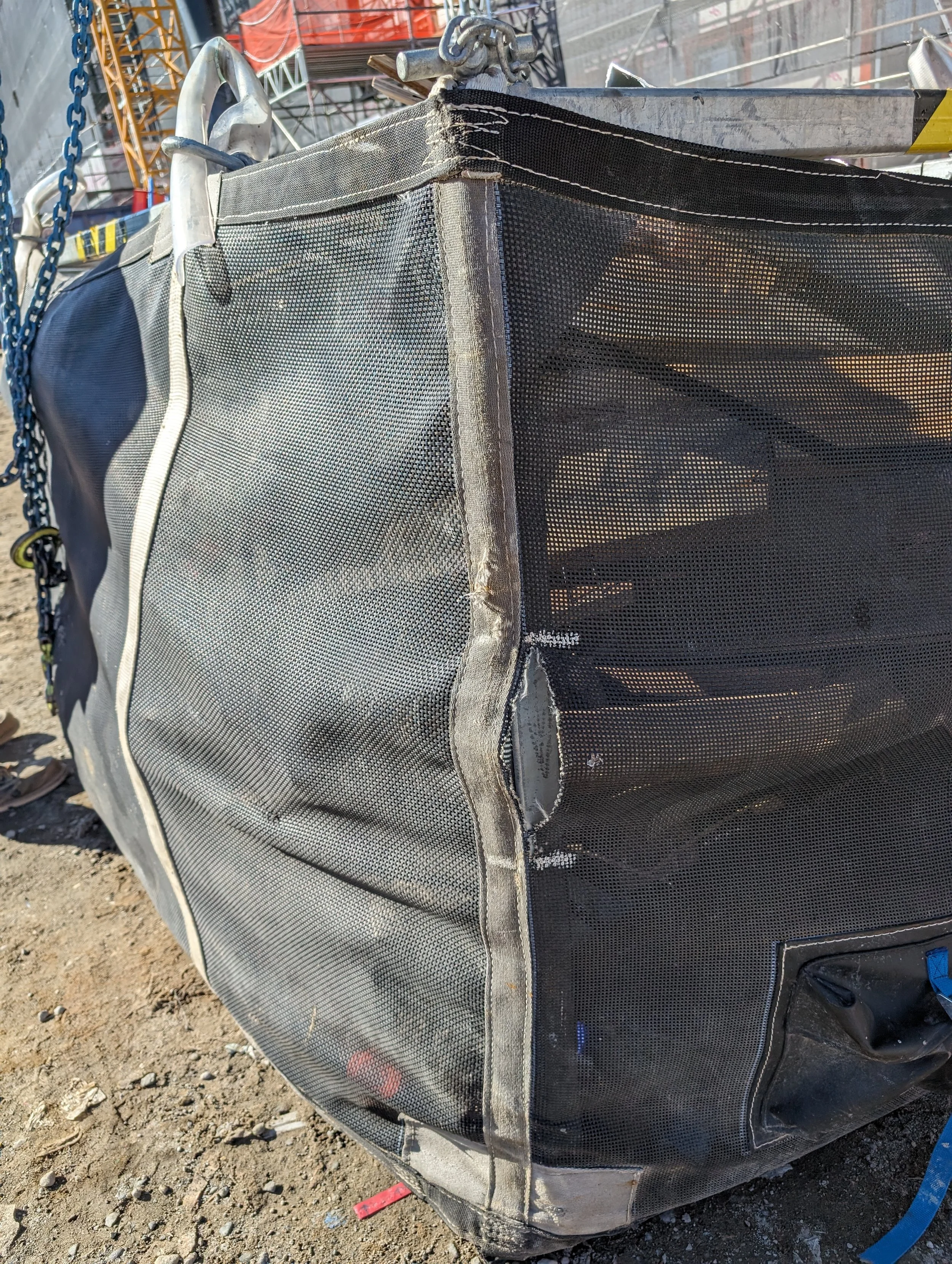
10.) Other Conditions that cause doubt.
Examples of Below the Hook Devices That Need to Be Pulled From Crane Service
Some examples of below the hook lifting devices that shouldn’t be used are below with some notes. The examples can help riggers see the problems from the real world. I can leave my house and find a hoisting violation in my state within two hours any day of any week. We have to learn to see these problems before they become a problem we never forget. The point of this blog is to help people in the field see the problems they walk by every day. OSHA uses broad language. People focus narrowly on legal terms. In the end, we are all to be afforded a safe workplace. Riggers, Lift Directors, and Crane Operators are the people that need to deliver that workplace with regard to hoisting. If you lift unsafe lifting devices, then you are not doing your part. Speak up forcefully.
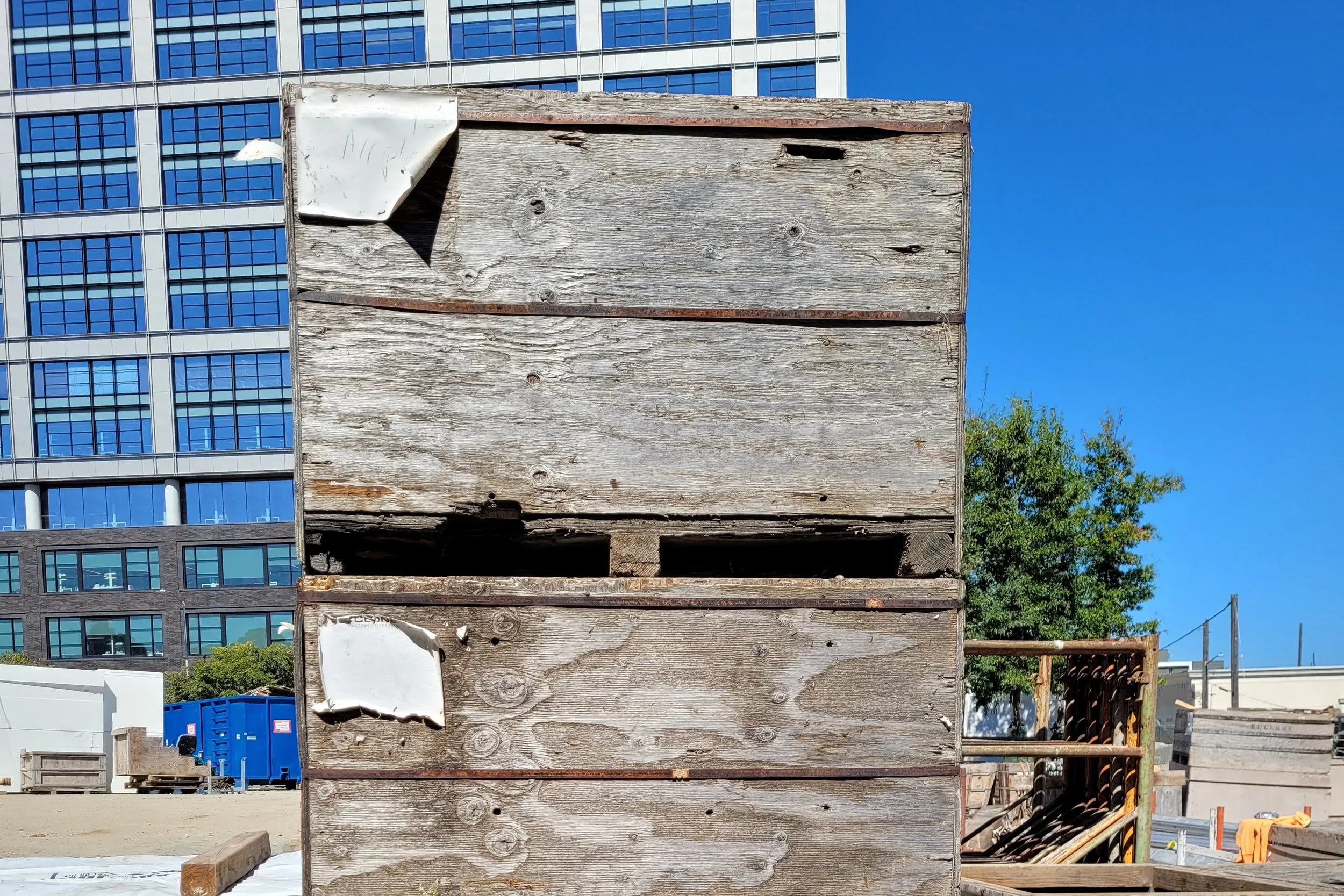
Wood Boxes - No rating. No manufacturer. No tag. ASME BTH-1 (design criteria) requires steel if ASME is Guidance. Slings do not close the weak link. If your slings are good for 10,000 lbs, can you put 10,000 lbs in the box? If not, what can you put in the box? If you don’t know, the answer has to be zero.
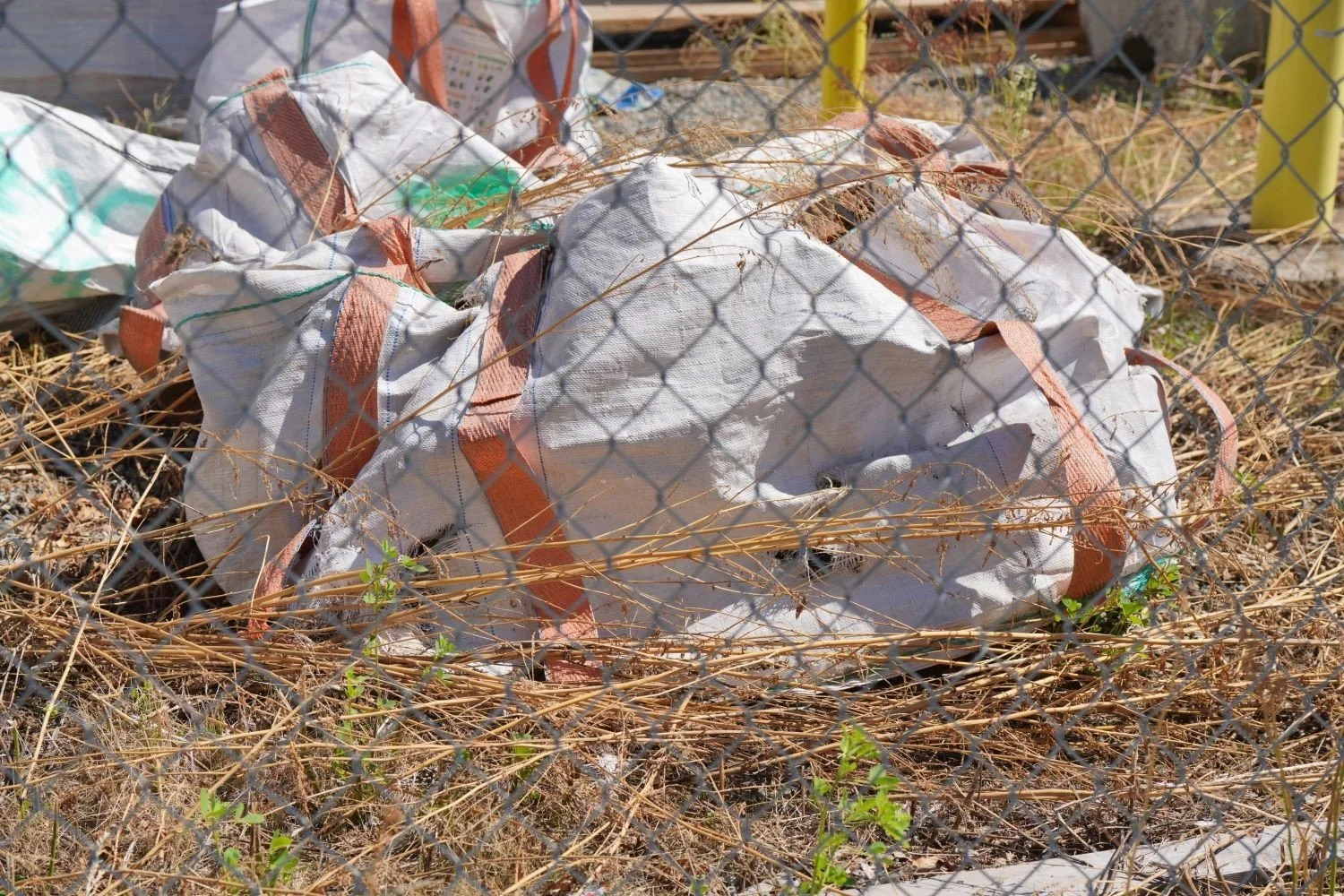
FIBC Bags - Big Bag - Super Sack. They are all one time use. This one is UV faded and has been used for many years. Not a legal lifter after the first lift.
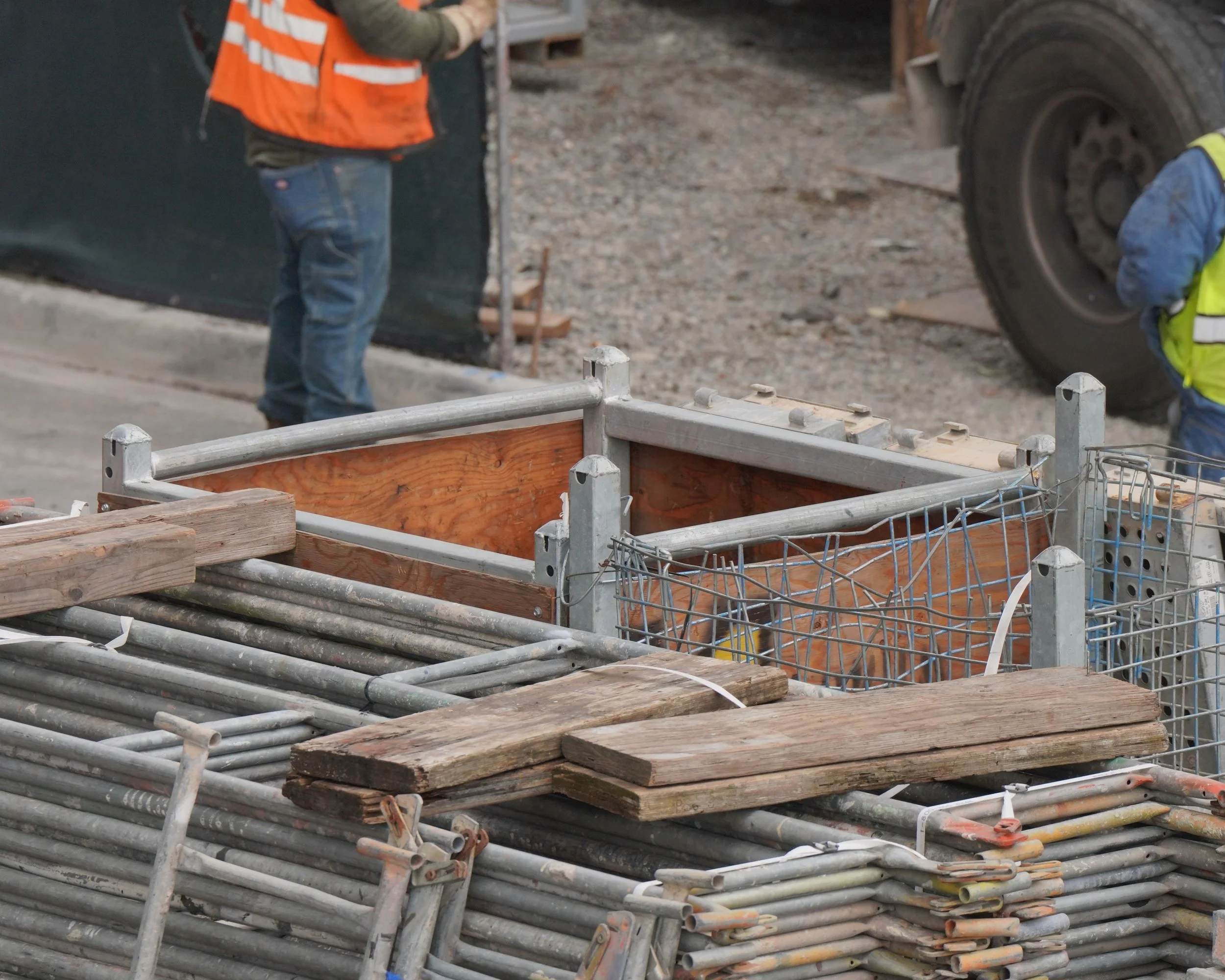
Four Post Pallet with wood sides screwed on. Damage to the steel. Not as the manufacturer intended. How much force is safe against the wood? Is it designed by the manufacturer to be lifted by straps? Is it tagged?
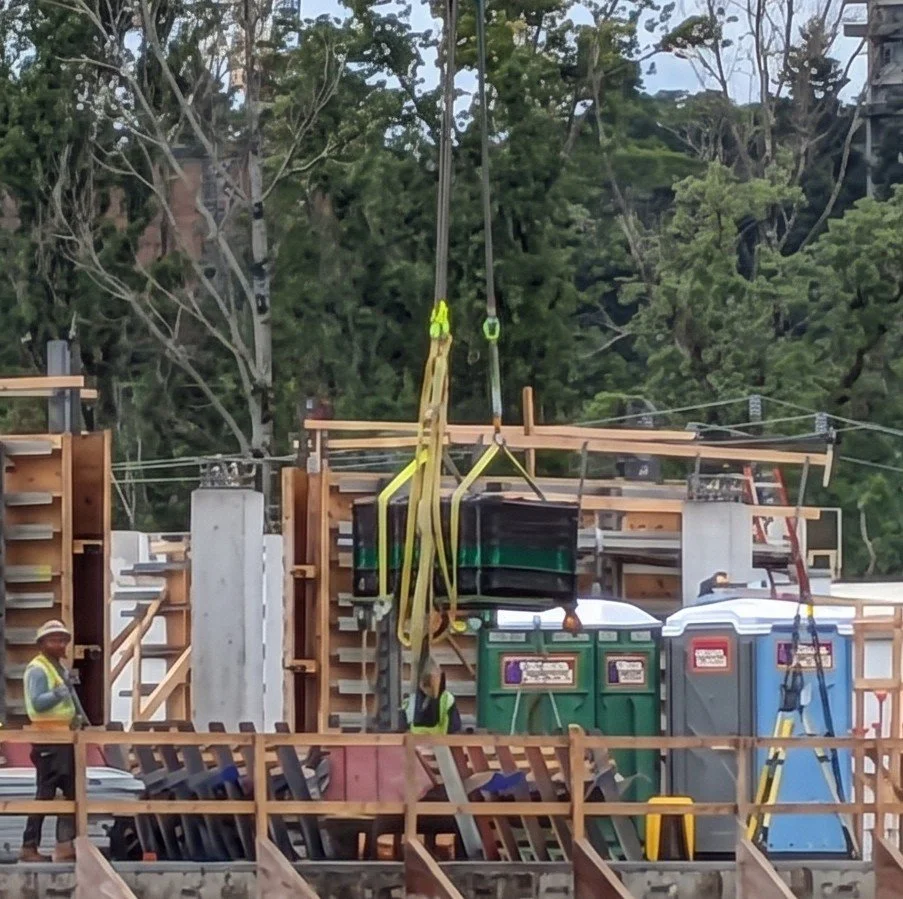
Plastic Tote - Rated for forklifts. Not rated for cranes. Not being lifted even where the fork tines are meant to go. When do we pull it from service for plastic embrittlement? Nearly every job has 50 of these rolling around.
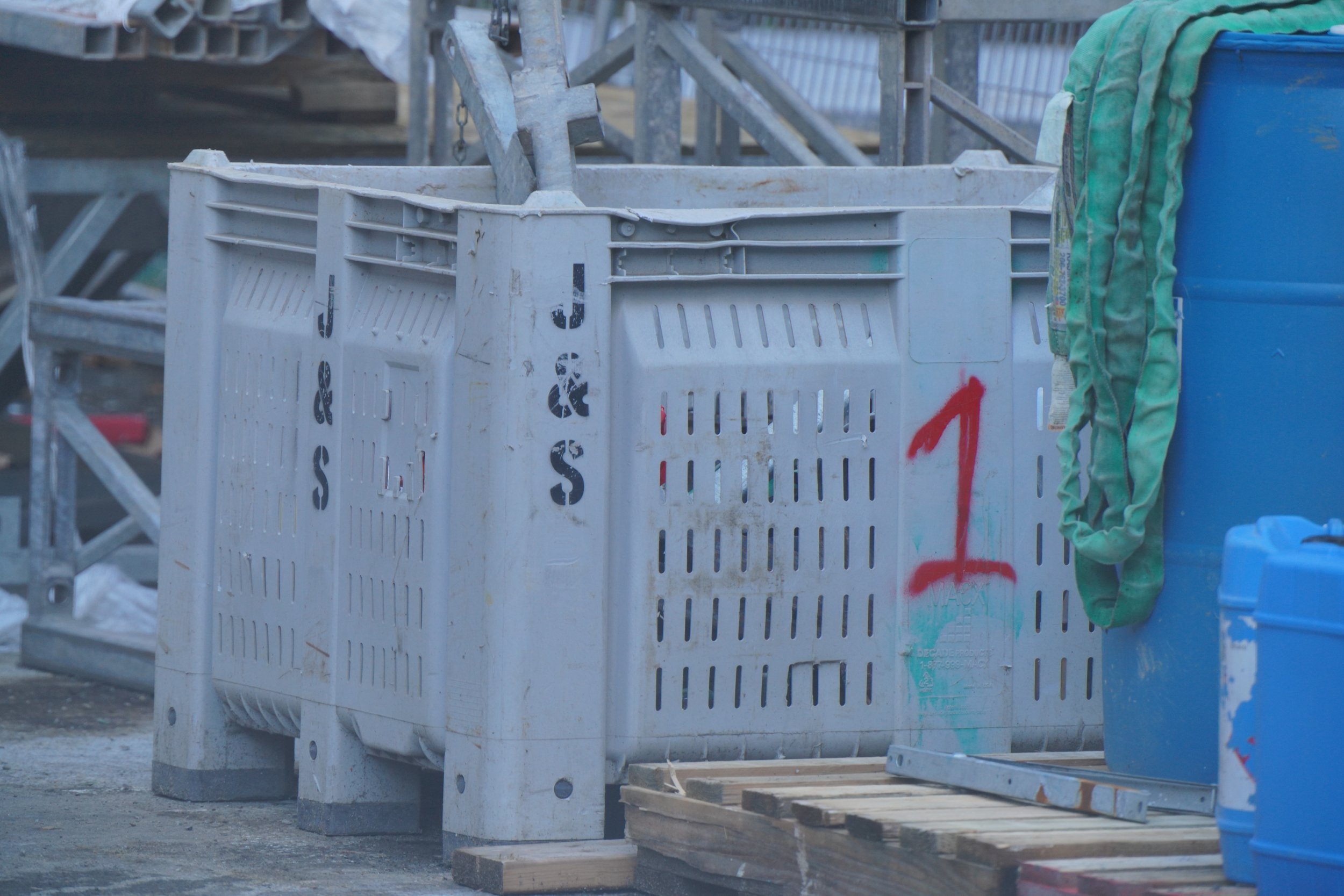
Plastic crate. Look at the plastic tearing on the upper left where a sling has bent it in the past. How much weight would it take for that to fail and allow items to fall out? Who has inspected it and put it on the list of inspected items? If it’s not inspected, why is it being lifted on site? OSHA 1926.251(a)(1) “Defective rigging equipment shall be removed from service.”
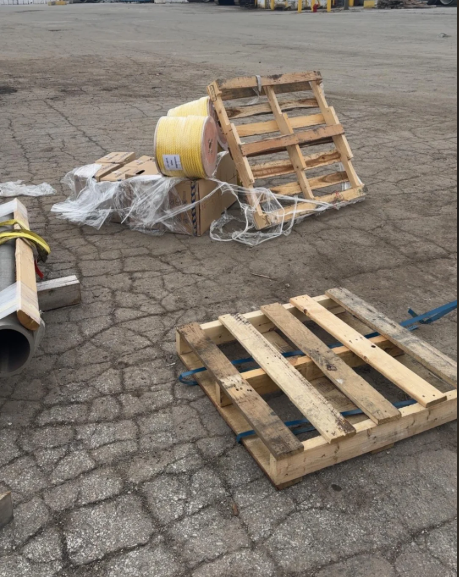
This Pallet was slung up. There is no way to safely rig a pallet. Center of gravity wasn’t even. Not having it in a bin allowed that balance to shift in the slings. On a set of crane forks with the weight at the back, it would have been safe. Or, put it in a bin with lifting eyes.
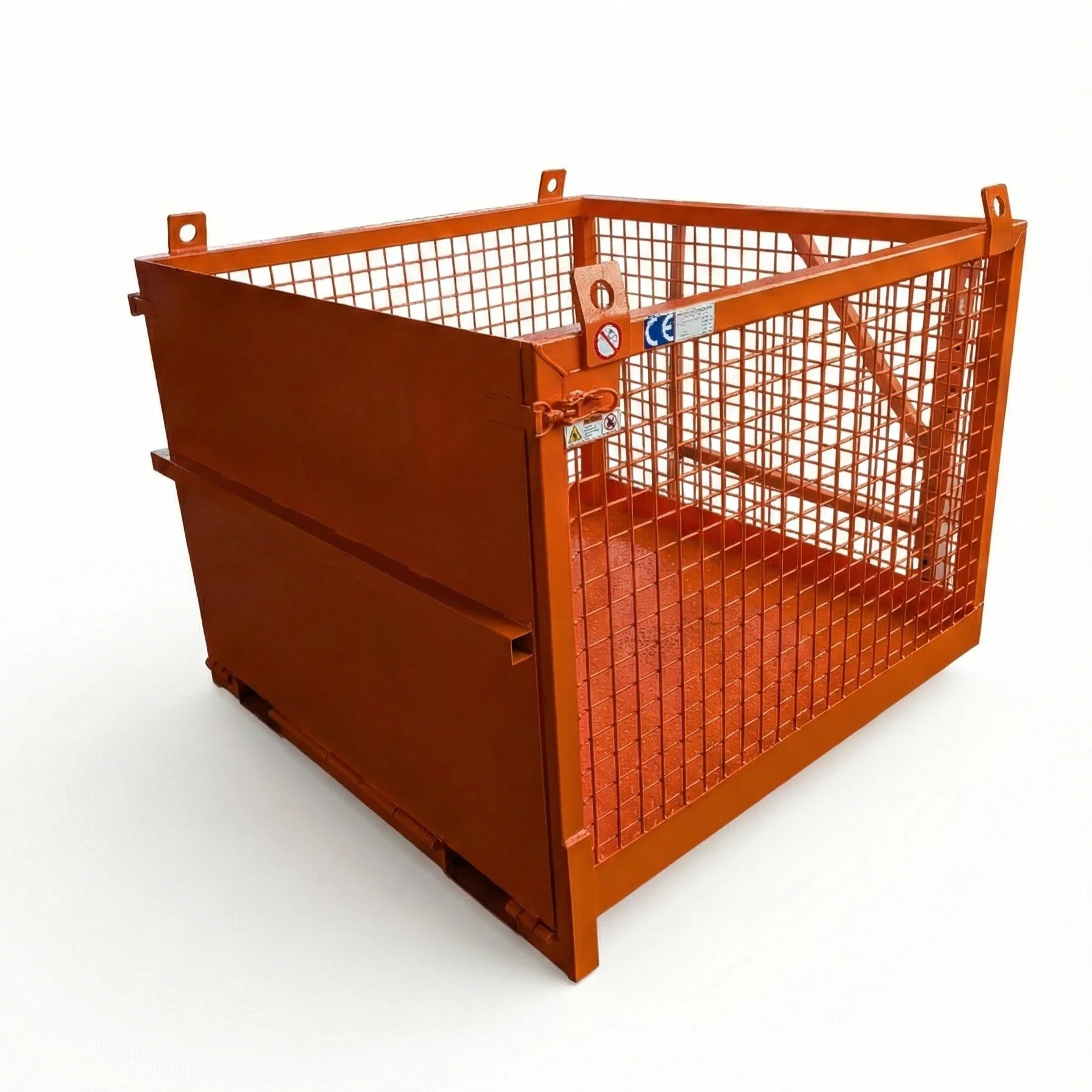
Crane pallet bin with structure and four lifting eyes above the center of gravity.
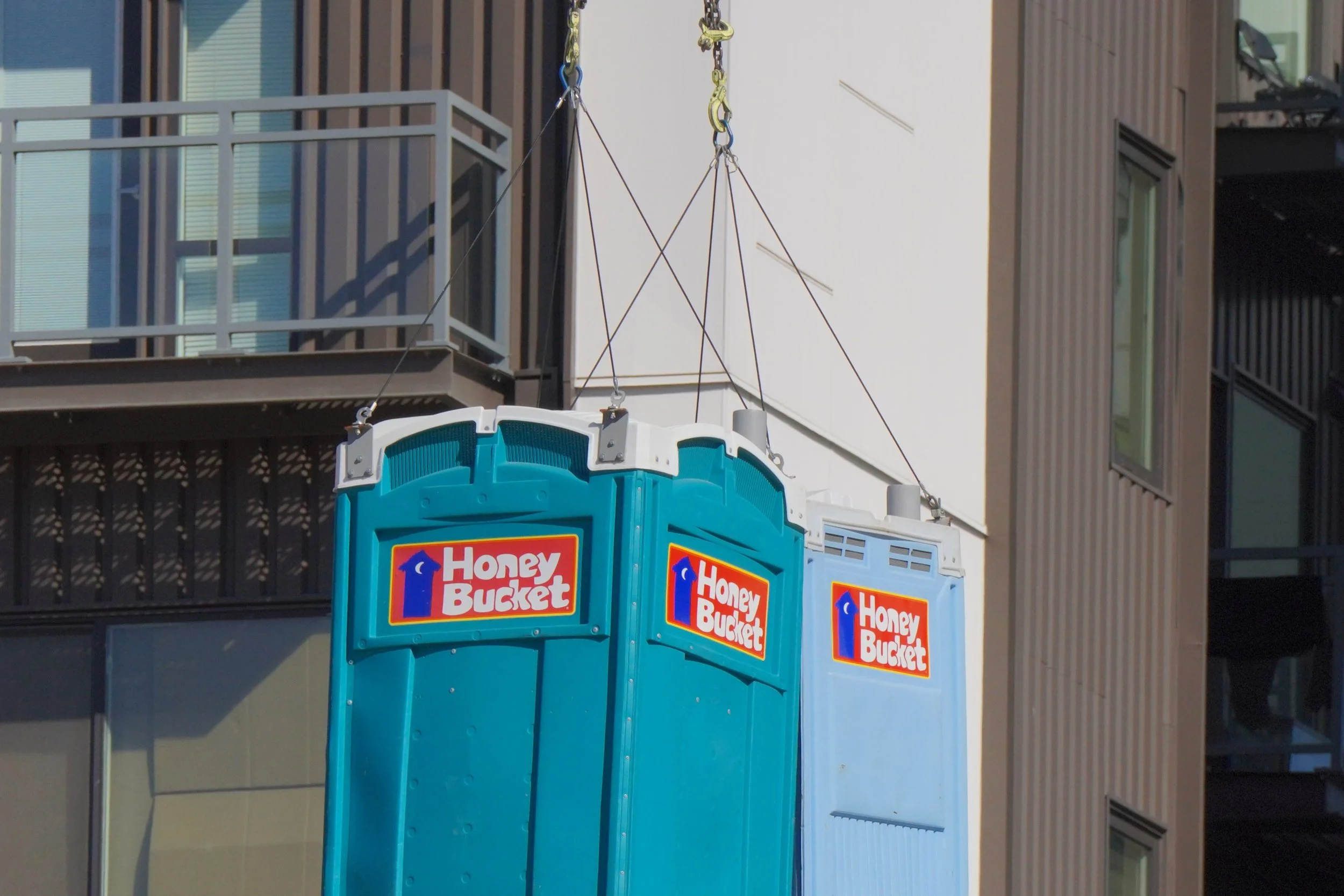
Porta Potties. Who is inspecting the system? Is the Lift Director or the Rigger on site doing it? Is the system safe? What’s it rated for? Are people just hooking on and going and not making sure slings go all of the way through?
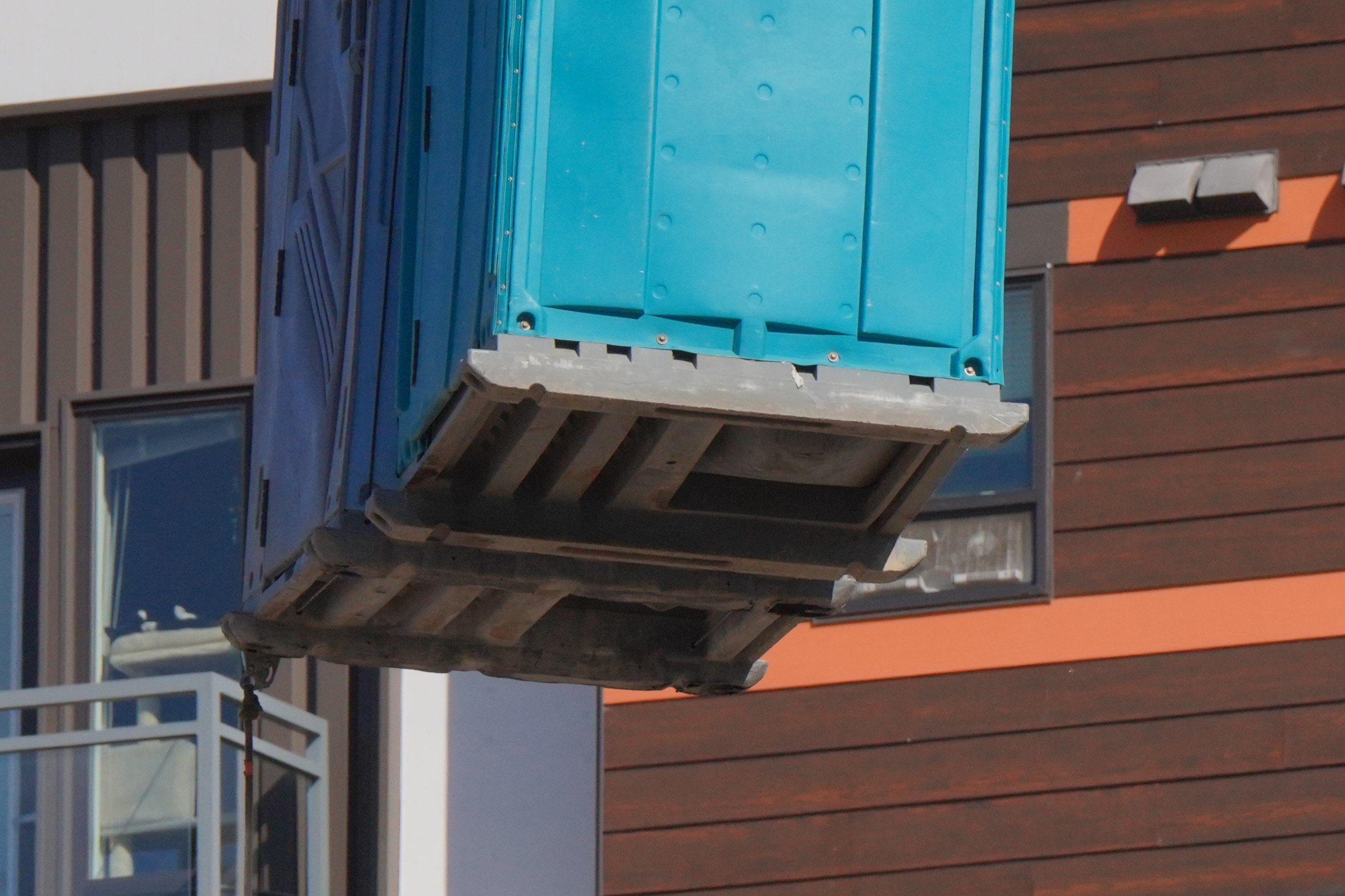
On many of these you’ll find slings running under the bottom from the top of the structure. They need to be checked. If it’s just in plastic, it’s hard to imagine it’s rated. I would ask the supplier for documentation, or fly them in a bin.
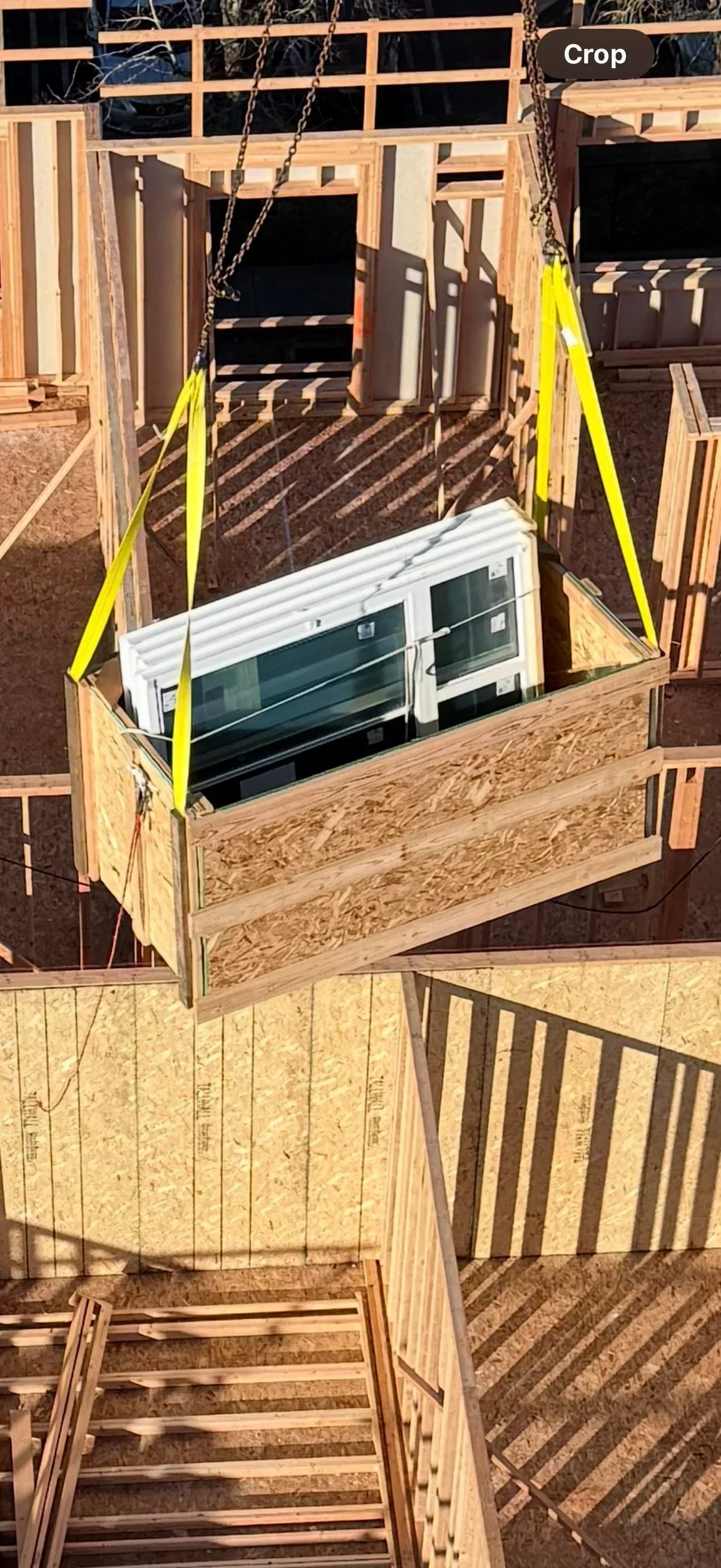
If a wood box made on the job is fine, where it the end of that thinking? Can you build a wooden concrete bucket? Does anyone need to rate it or is it just the guy that has been on the crew for 25 years that gets to decide? Obviously you need an engineer, and preferably a manufacturer. Homemade items really need to be of the past at this point.